
Vaginal Health Basics: What’s Normal, What’s Not & When to See a Doctor
Vaginal health is an important part of overall well-being, yet many normal changes can cause unnecessary worry.
Discharge, a mild natural odor, and changes throughout the menstrual cycle can all be normal. On the other hand, a new strong odor, unusual discharge, persistent itching, burning, pain, sores, or unexpected bleeding may need medical evaluation.
One important point: symptoms alone cannot always tell you what is causing the problem. Bacterial vaginosis, yeast infections, sexually transmitted infections, irritation, skin conditions, and hormonal changes can produce overlapping symptoms, which is why examination or testing may sometimes be needed. (ACOG)
Quick Answer: What Is Usually Normal?
Often normal
- clear or white vaginal discharge;
- mild natural odor;
- discharge that changes in amount or consistency during the menstrual cycle;
- temporary increases in discharge around certain hormonal stages;
- no persistent itching, burning, pain, or strong odor.
ACOG explains that normal vaginal discharge is generally clear to white, does not have a noticeable strong odor, and naturally changes throughout the menstrual cycle. (ACOG)
Worth discussing with a healthcare professional
- a new or strong odor;
- gray, green, yellowish, frothy, or otherwise unusual discharge;
- a major change in discharge compared with what is normal for you;
- persistent itching or burning;
- pain during urination;
- pain during sex;
- sores, blisters, bumps, or skin changes;
- unexplained bleeding;
- symptoms that keep returning.
Different conditions can look very similar, so color or odor alone should not be used to diagnose an infection at home. (CDC).
What Does a Healthy Vagina Look and Feel Like?
There is no single appearance, smell, or amount of discharge that defines vaginal health for every woman.
Bodies differ.
What matters most is understanding your usual pattern and noticing meaningful changes.
A healthy vagina naturally contains microorganisms, including bacteria that help maintain its environment. Vaginal discharge also plays a normal role in removing cells and fluid from the vagina. (ACOG)
You generally do not need special products to make the vagina “cleaner.”
In fact, attempting to remove all natural moisture, discharge, or odor may cause irritation or disrupt the vaginal environment.

Educational illustration showing the vagina and vulva
Vagina vs. Vulva: What’s the Difference?
These terms are often used interchangeably, but they refer to different parts of the body.
The vagina
The vagina is the internal muscular canal that extends from the vaginal opening toward the cervix and uterus.
The vulva
The vulva refers to the external genital area.
It includes structures such as:
- labia majora;
- labia minora;
- clitoris;
- vaginal opening;
- surrounding external tissues.
ACOG defines the vulva as the external female genital area and the vagina as the tube-like internal structure leading from the uterus toward the outside of the body. (ACOG)
This distinction matters because symptoms such as itching, skin irritation, bumps, and burning may actually involve the vulva, rather than the vagina itself.
Is Vaginal Discharge Normal?
Yes.
Vaginal discharge is usually a normal part of reproductive health.
ACOG states that normal discharge is mostly water and contains microorganisms that are part of the vaginal environment. Its amount and composition can change during the menstrual cycle. (ACOG)
Normal discharge may be:
- clear;
- white;
- thin;
- slightly thicker at certain times;
- more noticeable at some stages of the menstrual cycle.
The most useful question is often not:
“Is discharge normal?”
but:
“Has my discharge changed significantly from what is normal for me?”
Normal Vaginal Discharge vs. Changes Worth Checking
| Feature | Often Normal | Worth Checking |
|---|---|---|
| Color | Clear to white | New gray, green, yellowish, or unusual color |
| Odor | Mild or not noticeable | New, strong, fishy, or unpleasant odor |
| Amount | May change through the cycle | Sudden major change from your usual amount |
| Texture | May vary naturally | New unusual consistency with symptoms |
| Itching | Absent | Persistent itching |
| Burning | Absent | Burning or irritation |
| Pain | Absent | Pelvic pain, pain with sex, or painful urination |
This table is a guide, not a diagnostic tool. Several vaginal conditions can produce similar symptoms. (ACOG).
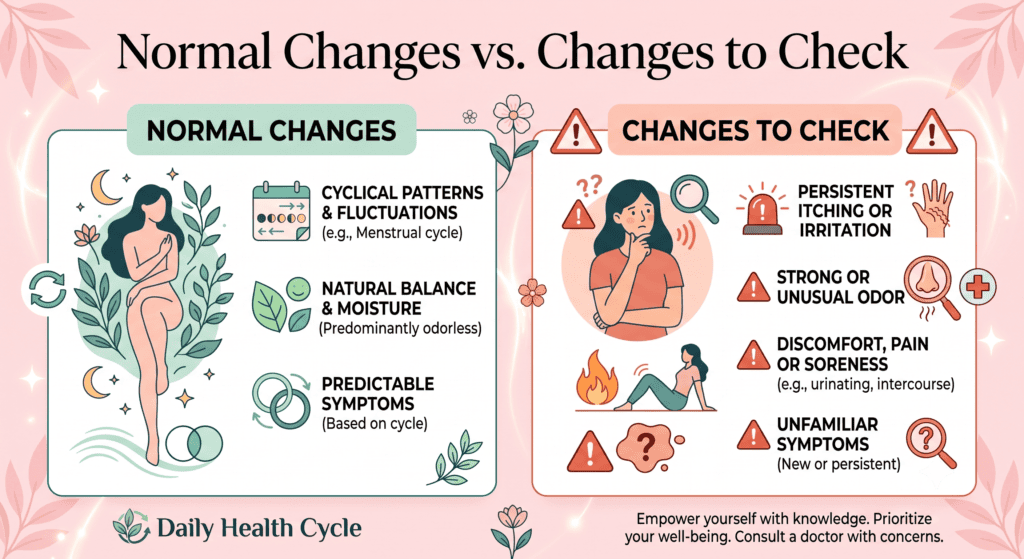
Common normal vaginal discharge changes and symptoms that may need medical evaluation
Is Vaginal Odor Normal?
A mild natural odor can be normal.
The vagina is not supposed to be completely odorless.
Odor can vary somewhat with:
- menstrual cycle changes;
- physical activity;
- sweat;
- sexual activity;
- hormonal changes.
The Office on Women’s Health notes that even a healthy vagina can have a mild odor and that odor may change during the day. (Office on Women’s Health)
However, a new strong or noticeable odor, especially when combined with unusual discharge, itching, burning, or discomfort, may suggest that something has changed.
ACOG advises discussing a noticeable change in odor with a healthcare professional rather than trying to mask it with sprays, deodorants, or douches. (ACOG)
Vaginal Itching, Burning, and Irritation
Itching or burning can have many possible causes.
They may include:
- yeast infection;
- bacterial vaginosis;
- an STI;
- irritation from products;
- contact dermatitis;
- shaving or friction;
- hormonal changes;
- vulvar skin conditions.
ACOG advises contacting a healthcare professional when vulvar itching, burning, pain, or skin changes occur, because some conditions require examination or specific treatment. (ACOG)
Do not assume persistent itching always means a yeast infection.
Several conditions can feel similar.
Common Causes of Vaginal Symptoms
1. Bacterial Vaginosis
Bacterial vaginosis, or BV, happens when the balance of bacteria in the vagina changes.
Many people with BV have no symptoms.
When symptoms do occur, CDC lists possible signs such as:
- thin white or gray discharge;
- strong fish-like odor;
- burning when urinating;
- itching or irritation. (CDC)
BV is treatable, but a clinician may need to evaluate vaginal fluid to confirm the cause.
Avoid trying to diagnose BV based only on odor.
2. Vaginal Yeast Infection
A vaginal yeast infection occurs when Candida yeast grows excessively.
Possible symptoms include:
- vaginal or vulvar itching;
- soreness;
- burning;
- discomfort during urination;
- pain during sex;
- abnormal discharge. (CDC)
ACOG notes that yeast infections may cause thick white discharge, but symptoms overlap with other vaginal conditions. (ACOG)
That is why repeatedly treating yourself for “yeast” without confirmation can sometimes delay the correct diagnosis.
3. Trichomoniasis and Other STIs
Trichomoniasis is a sexually transmitted infection caused by a parasite.
Some people have few or no symptoms.
When symptoms occur, women may experience:
- genital itching or irritation;
- burning;
- discomfort with urination;
- unusual discharge;
- unpleasant odor. (CDC)
Other STIs may also cause discharge, pelvic discomfort, bleeding, urinary symptoms, or no symptoms at all.
Testing—not appearance alone—is the safest way to determine whether an STI is present.
4. Irritation From Soaps and Feminine Products
Not every symptom is caused by infection.
Fragrances, soaps, sprays, wipes, detergents, fabrics, pads, and other products may irritate sensitive vulvar skin.
ACOG identifies soaps, fabrics, and perfumes among possible triggers for contact dermatitis of the vulva. (ACOG)
If irritation begins after introducing a new product, stop using it and monitor the area.
Persistent pain, itching, swelling, or skin changes should be evaluated.
5. Antibiotics and Changes in Vaginal Flora
Antibiotics can alter bacteria that normally live in the body.
For some women, this can contribute to yeast overgrowth.
CDC recommends using antibiotics only as prescribed and following the prescribed directions. (CDC)
If vaginal symptoms appear during or after antibiotic treatment, ask a healthcare professional whether evaluation is appropriate rather than automatically adding another medication.
Vaginal Dryness and Hormonal Changes
Vaginal dryness is not always an infection.
Hormonal changes—especially declining estrogen around perimenopause and menopause—can make vaginal tissues thinner, drier, and less elastic.
Possible symptoms of genitourinary syndrome of menopause include:
- vaginal dryness;
- burning;
- itching;
- decreased lubrication;
- pain during sex;
- urinary symptoms;
- recurrent urinary infections. (ACOG)
Pregnancy, breastfeeding, medications, and other health factors may also affect vaginal comfort.
Persistent dryness or pain is worth discussing with a clinician because treatment depends on the cause.
How to Care for Your Vaginal Health
Good vaginal health is usually about gentle care, not aggressive cleaning.
Clean the vulva—not inside the vagina
The vagina naturally cleans itself.
The Office on Women’s Health advises against cleaning inside the vagina because natural mucus helps remove blood, semen, and vaginal discharge. (Office on Women’s Health)
For the external vulvar area, ACOG recommends gentle washing and avoiding heavily fragranced products. Plain water may be sufficient when the skin is irritated. (ACOG)
Simple routine
- wash the external area gently;
- use lukewarm water;
- choose fragrance-free products if using soap;
- rinse well;
- pat dry rather than rubbing.
Choose breathable clothing
Tight, damp clothing can trap heat and moisture.
ACOG and CDC recommend breathable clothing and cotton-containing underwear as reasonable measures to reduce irritation and moisture around the genital area. (ACOG)
Change out of:
- wet swimsuits;
- sweaty workout clothing;
- damp underwear
when practical.
Change menstrual products regularly
Pads, tampons, liners, menstrual cups, and other products should be used according to their instructions.
If a particular product causes irritation, consider a fragrance-free alternative and discuss persistent symptoms with a healthcare professional.
Practice safer sex
Condoms can reduce the risk of many sexually transmitted infections.
If you have:
- a new sexual partner;
- multiple partners;
- concern about exposure;
- unexplained discharge or pelvic symptoms,
STI testing may be appropriate even when symptoms are mild or absent.
6 Vaginal Hygiene Habits to Avoid
1. Douching
Avoid washing inside the vagina with water, vinegar, baking soda, antiseptics, or commercial douche solutions.
Douching can alter normal vaginal bacteria and acidity. The Office on Women’s Health advises against it and notes associations with vaginal irritation, BV, STIs, pelvic inflammatory disease, and pregnancy complications. (Office on Women’s Health)
2. Vaginal deodorants
A vagina does not need perfume.
Sprays and deodorizing products can irritate sensitive tissue and may simply mask symptoms that need evaluation. (ACOG)
3. Strongly scented soaps
Fragrance can irritate the vulva.
Use gentle fragrance-free products externally when needed.
4. Cleaning inside the vagina
Internal washing is unnecessary.
The vagina naturally maintains and cleans itself. (Office on Women’s Health)
5. Treating every symptom as a yeast infection
Over-the-counter antifungal products can be appropriate in some situations, but ACOG warns that symptoms attributed to yeast may actually have another cause. (ACOG)
CDC also recommends testing when appropriate before treatment, especially when symptoms persist or recur. (CDC)
6. Ignoring recurring symptoms
Repeated odor, burning, discharge changes, or irritation deserve evaluation.
Recurring symptoms may require a different diagnosis or treatment strategy.

Gentle vaginal and vulvar hygiene habits for women
When to See a Doctor
Contact a healthcare professional if you develop:
- persistent itching;
- burning;
- strong or new odor;
- significant discharge changes;
- pain during urination;
- pain during sex;
- pelvic pain;
- genital sores or blisters;
- unexplained bumps;
- unusual skin changes;
- unexplained bleeding;
- symptoms that return after treatment.
ACOG specifically recommends medical evaluation for vulvar itching, burning, pain, and skin changes. (ACOG)
You should also seek evaluation if you believe you have a vaginal infection for the first time or if over-the-counter treatment does not improve symptoms. (ACOG)
During pregnancy
If you are pregnant and develop new vaginal symptoms, contact your prenatal healthcare professional.
For example, symptomatic BV during pregnancy deserves medical attention because BV has been associated with an increased risk of premature birth and low birth weight. (CDC)
What Happens During a Gynecologist Visit?
You may be asked about:
- when symptoms started;
- discharge color or consistency;
- odor changes;
- itching or pain;
- menstrual cycle;
- sexual history;
- new sexual partners;
- hygiene products;
- medication use;
- recent antibiotic use;
- previous infections.
Depending on your symptoms, a clinician may:
- examine the vulva;
- perform a pelvic examination;
- collect vaginal fluid;
- perform STI testing;
- order additional laboratory tests.
CDC notes that medical history alone may be insufficient to accurately identify the cause of vaginitis; examination and testing can be important because several conditions produce similar symptoms. (CDC)
Before the appointment
Write down:
- your symptoms;
- when they began;
- menstrual dates;
- treatments already tried;
- medications and supplements;
- any relevant sexual-health concerns.
This can make the consultation more useful.

Woman discussing vaginal health symptoms with a gynecologist
Can an Online Gynecologist Help With Vaginal Symptoms?
Sometimes.
Telehealth can be useful for:
- discussing symptoms;
- reviewing medical history;
- discussing contraception or sexual health;
- deciding whether testing is needed;
- follow-up conversations;
- determining whether an in-person visit is necessary.
ACOG supports telehealth when safe and effective care can be provided remotely, but also emphasizes that some gynecologic concerns require an in-person examination or collection of laboratory samples. (ACOG)
So an online gynecologist consultation can be a useful first step, but vaginal symptoms involving persistent pain, lesions, bleeding, recurrent infections, or unclear discharge may still require an in-person visit.
Frequently Asked Questions
Is white vaginal discharge normal?
Usually, yes.
Clear or white discharge without a strong odor can be normal. The amount and consistency may change through the menstrual cycle. A new change in odor, color, amount, or consistency—particularly with itching or pain—is worth discussing with a clinician. (ACOG)
What does healthy vaginal discharge look like?
Normal discharge is often clear to white and does not have a strong noticeable odor.
There is no single “perfect” consistency because discharge naturally changes throughout the cycle. (ACOG)
Is vaginal odor normal?
Yes, some natural odor is normal.
A new strong, fishy, or otherwise unusual odor—especially with discharge changes, burning, or irritation—may need evaluation. (ACOG)
How should I clean my vagina?
Do not clean inside the vagina.
It is self-cleaning.
Gently wash the external vulva with water and, if tolerated, a mild fragrance-free cleanser. Avoid douching and scented sprays. (Office on Women’s Health)
Why does discharge change during the month?
Hormonal changes during the menstrual cycle can affect the amount and composition of vaginal discharge.
Changes can therefore be normal as long as they are not accompanied by concerning symptoms such as strong odor, persistent itching, burning, or pain. (ACOG)
What causes vaginal itching without discharge?
Possible causes include irritation, contact dermatitis, vulvar skin disorders, hormonal changes, or infection.
Because itching has multiple possible causes, persistent symptoms should be evaluated rather than treated based on one symptom alone. (ACOG)
How can I tell BV from a yeast infection?
Symptoms can overlap, so you cannot always tell reliably at home.
BV commonly causes increased thin discharge with a strong fishy odor, while yeast infection often causes itching, burning, soreness, and sometimes thick white discharge. But neither pattern is diagnostic by itself. (CDC)
Testing may be needed.
Can vaginal infections go away on their own?
It depends on the condition.
Some irritation may improve after removing the trigger, but infections such as BV, trichomoniasis, or recurrent candidiasis may require specific treatment.
Persistent symptoms should not simply be ignored.
When should I see a gynecologist for vaginal discharge?
Arrange an evaluation when discharge changes significantly from your normal pattern, especially if there is strong odor, itching, burning, pain, bleeding, urinary discomfort, or recurrent symptoms. (ACOG)
The Bottom Line
A healthy vagina does not need to be odorless, dry, or free of discharge.
Normal discharge and mild odor are part of vaginal health.
The most useful approach is to know what is typical for your body and pay attention to new or persistent changes.
Avoid douching and heavily scented products, care for the external vulva gently, and seek professional advice when symptoms include persistent itching, burning, pain, strong odor, unusual discharge, sores, or unexplained bleeding.
And remember: similar vaginal symptoms can have very different causes.
The right diagnosis matters because the right treatment depends on the cause.
Medical Disclaimer: This article is for educational purposes only and is not a substitute for professional medical advice, diagnosis, or treatment. If you have new, persistent, severe, or concerning symptoms, speak with a qualified healthcare professional.
Medical Sources
This article was developed using reputable medical sources including:
- American College of Obstetricians and Gynecologists — Vulvovaginal Health. (ACOG)
- American College of Obstetricians and Gynecologists — Vaginitis. (ACOG)
- CDC — Bacterial Vaginosis. (CDC)
- CDC — Vulvovaginal Candidiasis. (CDC)
- CDC — Vulvovaginal Symptoms and STI Treatment Guidelines. (CDC)
- Office on Women’s Health — Douching. (Office on Women’s Health)