Last updated October 23, 2026. Educational information, not medical advice: see our Medical Disclaimer.
If you had a caesarean, you may have noticed a small overhang of skin and tissue sitting just above your scar. Many women call it the “C-section shelf” or “C-section pouch”. It can make jeans and underwear sit awkwardly and it can be frustrating to look at, especially when the rest of your body is starting to feel more like yours again. The good news: it is very common, it is not a sign that anything went wrong, and for many women it softens a lot with time. This guide explains why it happens, what genuinely helps and when it is worth talking to a professional.
What is a C-section shelf?
A C-section shelf is a ledge of skin and soft tissue that folds over a low caesarean scar. It is usually most visible when you sit down, bend forward or wear low-rise trousers, and it is often softer and more noticeable in the first months after birth. Some women have a small pouch that fades within a year; others have a more defined shelf that stays.
It is different from general postpartum belly softness, which affects the whole tummy. A shelf is specifically shaped by the scar line, which acts a little like a seam pulling the skin inwards while the tissue above it folds over.
Why does it happen?
Several things usually combine:
- Stretched skin and connective tissue. Pregnancy stretches the skin of the abdomen for months. Skin regains some elasticity after birth, but not always all of it.
- Fat stored during pregnancy. The body naturally stores some extra fat around the lower tummy and hips, which adds volume above the scar.
- Separated abdominal muscles. Many women have some degree of diastasis recti after pregnancy, which lets the tummy push forward and makes the area above the scar more prominent.
- The scar itself. As the incision heals, the scar can become tethered to the deeper layers of tissue. According to plastic surgeon Dr. Darren Smith, this tethering is why the tissue above the scar gathers into a ledge, and why a shelf can remain even after weight loss.
Genetics, the number of pregnancies, weight changes and how your scar heals all play a role, which is why two women with similar births can have very different results.
Does a C-section shelf go away?
Often it improves a lot, but it does not always disappear completely. The outer wound usually closes within a few weeks, but scars keep remodelling for many months, and swelling, fat distribution and muscle tone continue to change throughout the first year after birth. Many women find the pouch is much softer and smaller by the time their baby is one.
If it is still very noticeable after a year, it is usually because loose skin or scar tethering is involved, and those do not respond much to exercise alone. That is not a failure on your part; it is simply how tissue heals.
What actually helps
1. Give it time and be kind to yourself
It is worth repeating: your body has done something huge. Most guidance suggests waiting at least several months before judging how your tummy will settle. Comparing yourself to photos from before pregnancy, or to other people online, rarely helps.
2. Rebuild your deep core
Gentle, progressive core work focused on the deep transverse abdominis and the pelvic floor can improve tone and support around the scar, and helps if you also have some muscle separation. Start only once your doctor or midwife says you are ready, usually after your postpartum check-up, and avoid crunches and full planks until a professional has checked you. Our guide to diastasis recti exercises and self-check explains how to begin.
3. Keep moving
Regular walking, gradually building up, is one of the best things you can do in the first months. It helps circulation, energy, mood and, over time, body composition. Add other activities as your care team allows.
4. Scar massage (once fully healed)
When the wound is completely closed and your midwife or doctor agrees, gentle scar massage can help the tissue feel softer and less tight. Use clean hands and a little unscented oil or moisturiser, and move the skin around and along the scar in small circles for a few minutes a day. It may feel strange or numb at first, which is common. A pelvic health physiotherapist can show you the right technique.
5. Nutrition and gradual weight changes
A balanced diet supports healing, energy and breastfeeding. If you want to lose some weight, slow and steady is best for your recovery and milk supply. Remember that diet and exercise reduce fat, but they do not remove loose skin or release a tethered scar, so they may soften a shelf without fully removing it.
6. Clothing that works with you
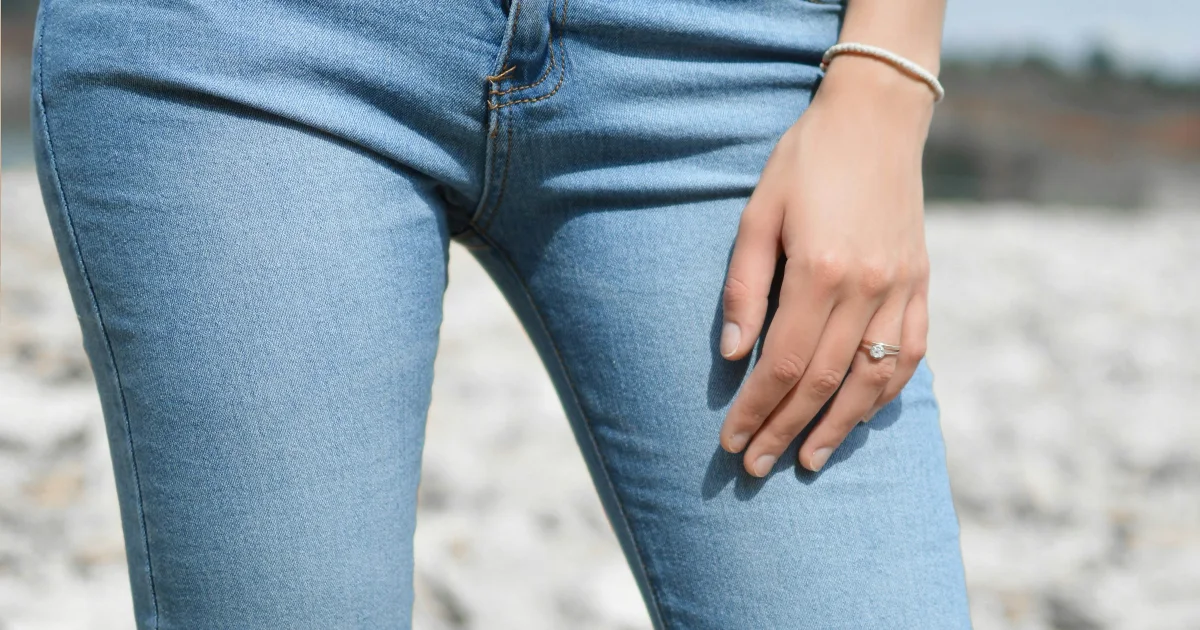
Low-rise trousers and underwear that sit right on the scar line tend to cut in and exaggerate the fold. A high-rise waistband that sits above the scar, around or above the belly button, smooths the area instead. Soft, breathable fabric matters too, since a healing scar can be sensitive.
This is where well-designed shapewear can help day to day. It does not change the shelf permanently, but it can smooth the line under clothes and give a feeling of gentle support. Once your scar has healed and your care team agrees, look for a high-rise cut, even support across the whole tummy rather than one tight band, and no seams or tight edges landing on the scar. Read more in our guide to shapewear after a C-section.
When to see a professional
Talk to your doctor or midwife if you notice any of the following:
- A bulge that pushes out when you cough or strain, or a lump near the scar, which can be a sign of a hernia.
- Pain, redness, warmth or discharge around the scar.
- A scar that becomes thick, raised and itchy over time, which may need specialist treatment.
- Ongoing back pain, pelvic floor symptoms or a wide gap between your abdominal muscles.
What about surgery?
For a shelf that is still there long after birth and bothers you, plastic surgeons offer options depending on what it is made of: liposuction when the main issue is fat and the skin is good quality, and a mini or full abdominoplasty (tummy tuck) when there is loose skin or muscle separation to repair. Dr. Smith advises waiting at least three to six months after delivery, or until you have finished breastfeeding, with your weight stable for around three months, before considering surgery. Any procedure is a personal decision to discuss with a board-certified plastic surgeon.
Frequently asked questions
How long does a C-section pouch last?
It varies. Many women notice a big improvement within the first year as swelling settles and the scar matures. A shelf that remains after a year usually involves loose skin or scar tethering.
Can exercise get rid of a C-section shelf?
Exercise can reduce fat and improve muscle tone, which often makes a shelf smaller. It cannot remove excess skin or release scar tissue, so it may not make it disappear completely.
Is it safe to wear shapewear over a C-section scar?
Once the wound has fully healed and your doctor or midwife agrees, gentle shapewear with a waistband above the scar is generally fine. Avoid anything tight or with seams on the scar, and stop if it causes pain.
Does scar massage really help?
Many women find it makes the scar feel softer and less tight. Only start once the wound is completely healed, and ask your midwife or a physiotherapist to show you how.
Keep reading
- Shapewear after a C-section: when and how to wear it
- Diastasis recti: self-check, exercises and what shapewear can do
- C-section recovery week by week
- All postpartum guides
This article is general information, not medical advice. Every recovery is different: talk to your doctor, midwife or a pelvic health physiotherapist about your own scar and recovery.
Sources
- Dr. Darren M. Smith, board-certified plastic surgeon: How to treat a C-section shelf
- Cleveland Clinic: Cesarean birth
- NHS: Caesarean section risks
- Cleveland Clinic: Diastasis recti
Free printable
Perimenopause symptom & cycle tracker
Track your periods, sleep, hot flashes and mood on one page, then bring it to your appointment. Enter your email to download it.
Sources cited in this article
- Dr. Darren M. Smith, board-certified plastic surgeon: How to treat a C-section shelf (darrensmithmd.com)
- Cleveland Clinic: Cesarean birth: 7246 cesarean birth c section (my.clevelandclinic.org)
- NHS: Caesarean section risks (nhs.uk)
- Cleveland Clinic: Diastasis recti: 22346 diastasis recti (my.clevelandclinic.org)
Last checked October 23, 2026. Spot an outdated source? Tell us.
About the author: Jessica Bordo writes Daily Health Cycle out of personal interest in women’s health, not as a clinician. Each article summarizes what sources such as the NHS, Mayo Clinic, Cleveland Clinic and ACOG say, and links to them so you can check the claims yourself. Use these guides to prepare questions for your own clinician, not to replace their advice. Our editorial standards explain how we research and update articles.
This article is for general education and isn’t medical advice. See our full disclaimer and talk with a qualified clinician about your own care.