
Last updated November 13, 2026. Educational information, not medical advice: see our Medical Disclaimer.
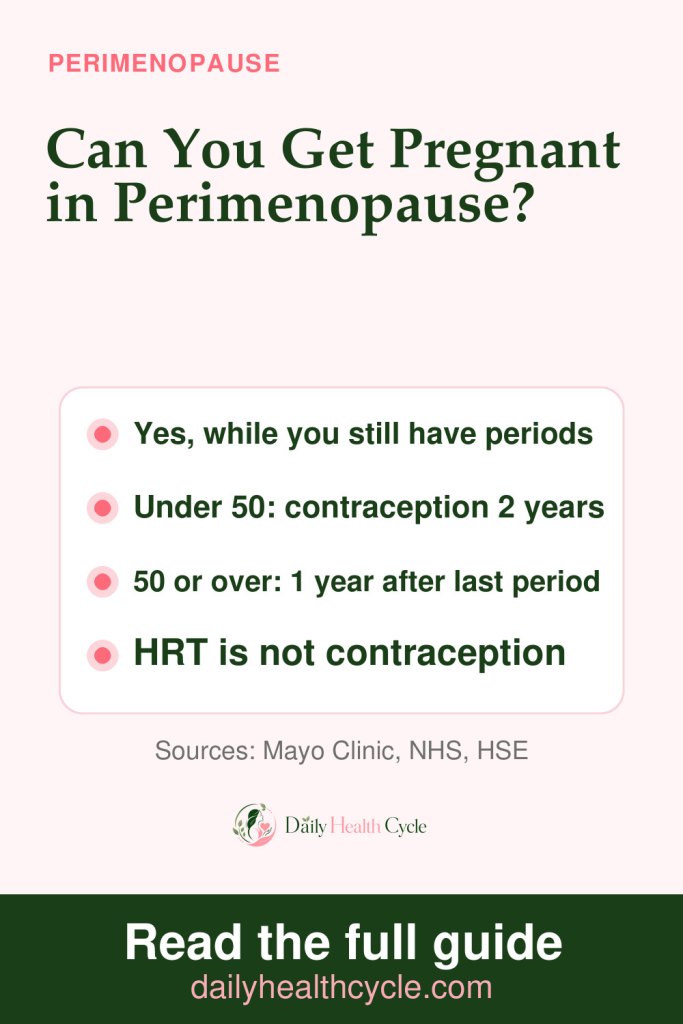
Quick answer: Yes. Fertility falls in perimenopause, but as long as you still have periods you can get pregnant. Health services advise keeping contraception until 2 years after your last period if you’re under 50, or 1 year if you’re 50 or over, and most women can stop at 55. HRT is not a contraceptive.
Key Takeaways
- You can get pregnant in perimenopause as long as you still have periods (Mayo Clinic).
- Keep contraception for 2 years after your last period if you’re under 50, 1 year if 50 or over; most women can stop at 55 (HSE).
- HRT does not prevent pregnancy.
- Early pregnancy and perimenopause share symptoms, so take a test if your period is late.
- If you’re over 40 and trying for a baby, see a doctor right away.
Can you get pregnant during perimenopause? It’s one of the most common questions women in their 40s ask, often after a late period and a moment of panic. The short answer is yes. Fertility is lower than it was in your 20s and 30s, but it doesn’t switch off until menopause, and irregular periods make it harder to know where you are in your cycle. Here’s what that means for contraception, pregnancy tests and planning a baby.
Yes, Pregnancy Is Still Possible
Mayo Clinic is clear: fertility decreases in perimenopause, but if you’re still having periods, pregnancy is still possible (Mayo Clinic). Cleveland Clinic gives the same advice: pregnancy is less likely, but you should keep using birth control until a healthcare provider tells you it’s safe to stop (Cleveland Clinic).
The reason is simple. In perimenopause your ovaries release eggs less regularly, not never. Some cycles have no ovulation at all, while others still do, and with irregular periods it’s hard to predict which is which. If you’re not sure what stage you’re in, start with what perimenopause is.
How Long Do You Need Contraception?
You only reach menopause once you’ve had no periods for a full year, and the advice on contraception is cautious. Ireland’s health service (HSE) recommends (HSE):
| Your age | Keep using contraception for |
|---|---|
| Under 50 | 2 years after your last period |
| 50 or over | 1 year after your last period |
| 55 or over | You can usually stop, as natural pregnancy is very rare |
Hormonal contraception can hide your natural periods, so it can be hard to tell when you’ve reached menopause while you’re on it. Talk to your doctor before you stop.
Which Contraception Suits You in Your 40s?
Most methods are still an option, with a few age rules from the HSE:
- The combined pill, patch or ring isn’t recommended over 40 if you smoke or have a BMI over 30, and only very low-risk women can continue them between 40 and 50.
- The combined pill and the progestogen-only injection shouldn’t be used over 50. A progestogen-only pill, implant, IUD or IUS are common alternatives.
- Condoms are still the only method that also protects against sexually transmitted infections.
One point catches many women out: HRT is not contraception (NHS). If you start HRT for symptoms while you still need contraception, you need both. Some options, such as a hormonal IUD, can do double duty, so ask your doctor. Our guide to HRT in perimenopause explains more.
Late Period: Perimenopause or Pregnancy?
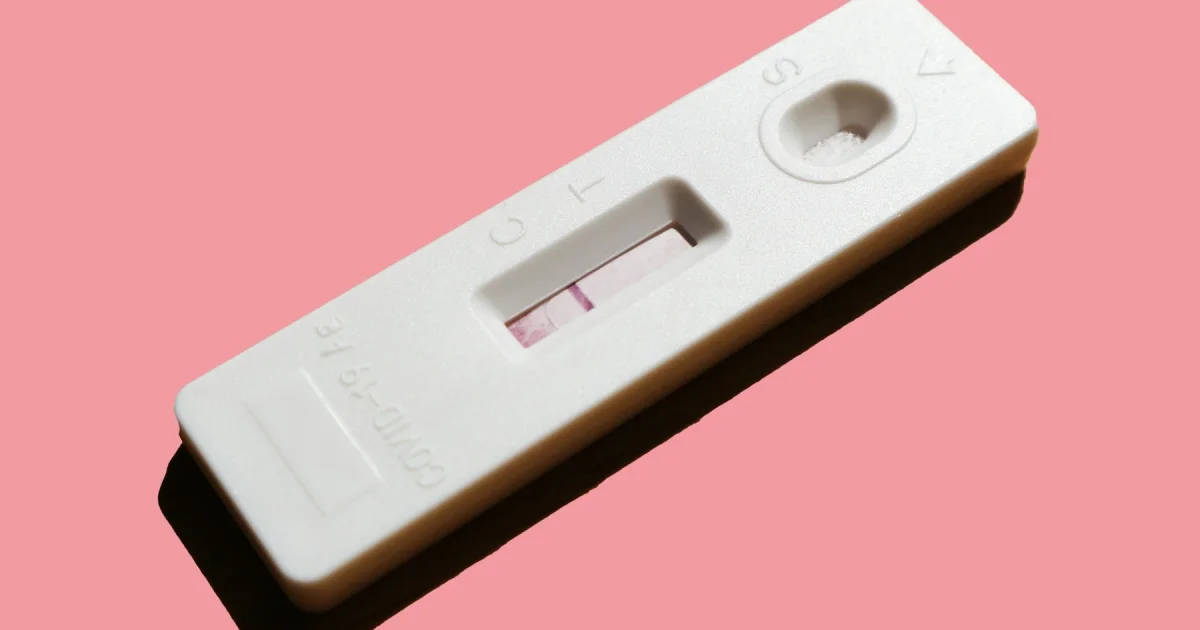
Early pregnancy and perimenopause can feel surprisingly similar. Both can bring a missed or late period, tiredness, sore breasts, mood changes and needing to pee more often. Nausea is a classic pregnancy sign, too. Because the overlap is so big, the only way to know is a pregnancy test. Home tests are reliable from the first day of a missed period, and if your cycles are irregular, testing about three weeks after unprotected sex gives a clear answer.
Can a blood test show whether you still need contraception? The HSE notes an FSH blood test can help in some cases, but it isn’t reliable if you take the combined pill, patch or ring. Our guide to the FSH test for perimenopause covers its limits.
If You Want to Get Pregnant
Your chances per cycle are lower in your 40s, and the risks of pregnancy, such as miscarriage and complications, rise with age. That doesn’t mean it can’t happen, but time matters, so don’t wait too long to get advice:
- Fertility specialists generally advise seeing a doctor after 6 months of trying if you’re 35 or over, and right away if you’re over 40 (ASRM).
- Irregular cycles make ovulation harder to spot. Our ovulation calculator and guide to knowing when you’re ovulating can help, but treat estimates with caution.
- Ask about a preconception check and folic acid before you try.
For the numbers by age, read pregnancy after 35 and getting pregnant at 40. If you’re considering treatment, see IVF success rates by age.
When to See a Doctor
- You’ve had a positive pregnancy test: book an early appointment.
- You have tummy pain, bleeding or feel faint with a positive test: get urgent help, as these can be signs of an ectopic pregnancy or miscarriage.
- You want to stop contraception and aren’t sure whether you’ve reached menopause.
- You’re over 40 and trying to conceive.
- Your periods are very heavy, last more than 7 days or come less than 21 days apart (Mayo Clinic).
Free printable PDF
Perimenopause symptom & cycle tracker
A one-page PDF to print and fill in by hand: periods, sleep, hot flashes and mood, ready to bring to your appointment. Enter your email and the download link appears right away.
Prefer to track on your phone? Use our online symptom tracker, no email needed.
Keep reading: What Is Perimenopause? and Pregnancy After 35: Your Real Chances, Risks and Next Steps
Frequently Asked Questions
Can you get pregnant during perimenopause?
Yes. Your fertility is lower, but you can still ovulate in some cycles, so pregnancy is possible until you’ve reached menopause.
How do I know if I’m pregnant or in perimenopause?
The symptoms overlap: a late period, sore breasts, tiredness and mood changes can happen with both. A home pregnancy test is the only way to know. Test from the first day of a missed period, or about three weeks after unprotected sex if your cycles are irregular.
When can I stop using contraception in perimenopause?
Health services generally advise 2 years after your last period if you’re under 50, and 1 year if you’re 50 or over. Most women can stop at 55. Check with your doctor first, especially if you use hormonal contraception.
Does HRT work as birth control?
No. HRT treats menopause symptoms but doesn’t prevent pregnancy. If you still need contraception, you need a separate method, although a hormonal IUD can be part of an HRT plan.
What are the chances of getting pregnant at 45?
They’re much lower than at younger ages, and they fall further each year, but they aren’t zero. If you don’t want a baby, keep using contraception. If you do, see a doctor straight away.
Can you get pregnant after missing periods for months?
It’s possible. Periods can return after a long gap in perimenopause, and you can ovulate before a period you didn’t know was coming. That’s why contraception is advised until a full year or two has passed.
Sources: Perimenopause — Mayo Clinic · Perimenopause — Cleveland Clinic · Contraception and menopause — HSE · Things you can do — NHS · Fertility evaluation of infertile women — ASRM
About the author
Jessica Bordo writes Daily Health Cycle out of personal interest in women’s health, not as a clinician. She shares practical, source-linked content to help women feel more confident in their bodies, make informed choices, and build healthier everyday habits. More about Jessica
This article is for educational purposes only and isn’t a substitute for professional medical advice, diagnosis, or treatment. Read our medical disclaimer.
Sources cited in this article
- Mayo Clinic: Syc 20354666 (mayoclinic.org)
- Cleveland Clinic: 21608 perimenopause (my.clevelandclinic.org)
- HSE: Contraception and menopause (www2.hse.ie)
- NHS: Things you can do (nhs.uk)
- ASRM: Fertility evaluation of infertile women a committee opinion 2021 (asrm.org)
Last checked November 13, 2026. Spot an outdated source? Tell us.