

Last updated November 24, 2026. Educational information, not medical advice: see our Medical Disclaimer.
Almost every woman wonders at some point whether her vaginal discharge is normal. It changes through your cycle, with pregnancy, contraception and age, so it’s not always obvious when a change is just your body doing its job and when it’s a sign of infection. Knowing the usual patterns makes it much easier to tell the difference.
Quick answer: Normal vaginal discharge is clear or white, has no strong smell, and changes in texture through your cycle, becoming clearer and more slippery around ovulation (NHS). See a doctor if it smells fishy, looks like cottage cheese, turns green, yellow or frothy, or comes with itching, pain, sores or bleeding between periods. Don’t wash inside your vagina.
Key Takeaways
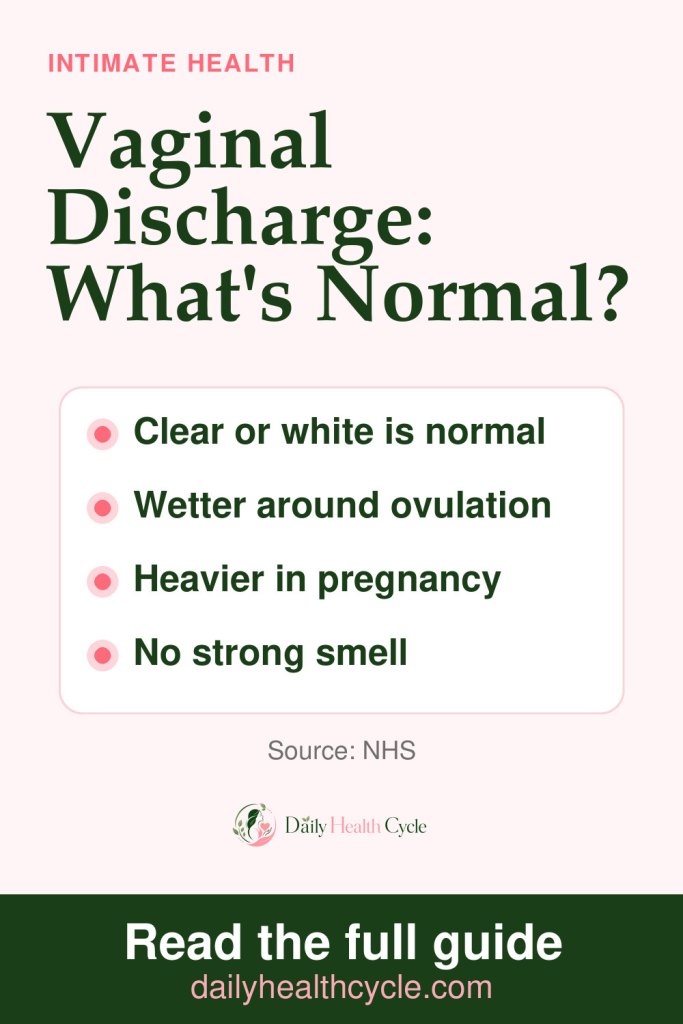
- Discharge keeps the vagina clean and moist. It’s usually normal if it’s clear or white with no strong smell (NHS).
- It’s normal for it to be heavier in pregnancy, when you’re sexually active or using contraception, and clearer and wetter around ovulation.
- A fishy smell suggests BV, cottage-cheese discharge suggests thrush, and green, yellow or frothy discharge can mean trichomoniasis.
- Discharge with pelvic pain, bleeding, blisters or sores needs checking for sexually transmitted infections.
- In perimenopause and after menopause, many women notice less discharge and more dryness.
What Normal Discharge Looks Like
The NHS explains that discharge is fluid or mucus that keeps the vagina clean and moist. It’s usually normal if it:
- Doesn’t have a strong smell
- Is clear or white
- Is thick and sticky, or slippery and wet
The amount varies from woman to woman, and from week to week. That’s why it helps to know what’s normal for you, so you notice when something changes.
How Discharge Changes Through Your Cycle and Life
- Around ovulation: discharge often becomes clearer, wetter and more slippery, like raw egg white. It’s one of the signs of your fertile window. See how to know when you’re ovulating.
- Pregnancy, sex and contraception: the NHS says you usually get heavier discharge during pregnancy, if you’re sexually active, or if you’re using contraception.
- Perimenopause and menopause: as estrogen falls, many women notice less discharge and a drier feeling, sometimes with itching or soreness. See vaginal dryness in perimenopause.
Signs Your Discharge Isn’t Normal
The NHS lists these changes and their possible causes:
| Discharge change | Possible cause |
|---|---|
| Smells fishy | Bacterial vaginosis (BV) |
| Thick and white, like cottage cheese | Thrush (a yeast infection) |
| Green, yellow or frothy | Trichomoniasis |
| With pelvic pain or bleeding | Chlamydia or gonorrhoea |
| With blisters or sores | Genital herpes |
BV and thrush are the most common causes, and they need different treatments: BV is treated with antibiotics and thrush with antifungals. Our guide to BV vs yeast infection explains how to tell them apart, and why self-diagnosis is often wrong.
How to Keep the Vagina Healthy
The vagina cleans itself, so it doesn’t need special products. The NHS advises:
- Do gently wash the skin around the vagina (the vulva) with warm water and a mild, unscented soap.
- Don’t use perfumed soaps, gels, deodorants or scented wipes.
- Don’t wash inside the vagina (douching). It can upset the natural balance of bacteria and make infections more likely.
Breathable cotton underwear and changing out of damp clothes, such as swimwear or gym kit, can also help, especially if you get thrush often.
When to Get Help
The NHS advises getting medical advice if your discharge changes in smell, colour or texture, if you have more than usual, or if it comes with:
- Itching or soreness
- Bleeding between periods or after sex
- Pain when you pee
- Pain in your pelvis or lower tummy
In the UK, you can contact NHS 111, your GP, or a sexual health clinic, and many sexual health clinics offer walk-in appointments. The NHS advises against self-diagnosing, because the causes look similar and need different treatments. Any bleeding after menopause should always be checked by a doctor.
Vaginal Discharge FAQ
What does normal vaginal discharge look like?
According to the NHS, normal discharge is clear or white, doesn’t have a strong smell, and can be thick and sticky or slippery and wet. It changes through your cycle and is often clearer and wetter around ovulation.
Why does my discharge smell fishy?
A fishy smell is a common sign of bacterial vaginosis (BV), especially after sex. BV is treated with antibiotics, so see a GP, pharmacist or sexual health clinic rather than trying to wash it away, which can make it worse.
Is it normal to have more discharge before my period?
Discharge changes through your cycle, and the amount varies from woman to woman. It’s usually normal as long as it’s clear or white with no strong smell. Get it checked if it changes colour, smells, or comes with itching or pain.
What does thrush discharge look like?
The NHS describes thrush discharge as thick and white, like cottage cheese. It usually doesn’t smell, but often comes with itching and soreness. Thrush is treated with antifungal medicine.
Why do I have less discharge in my 40s?
Falling estrogen in perimenopause and after menopause can mean less discharge and a drier feeling, sometimes with itching or discomfort during sex. It’s very common and treatable with moisturisers, lubricants or low-dose vaginal estrogen.
Your Next Step
Get to know your normal pattern through a cycle or two, so you can spot real changes. If your discharge changes in smell, colour or texture, or comes with itching or pain, get it checked rather than guessing: the right treatment depends on the right diagnosis.
Sources
- NHS: Vaginal discharge
- NHS: Bacterial vaginosis
- NHS: Thrush in men and women
- NHS: Trichomoniasis
- NHS: Vaginal dryness
- NHS: Postmenopausal bleeding
- ACOG: Vaginitis
Sources last checked: November 18, 2026.
Free printable PDF
Perimenopause symptom & cycle tracker
A one-page PDF to print and fill in by hand: periods, sleep, hot flashes and mood, ready to bring to your appointment. Enter your email and the download link appears right away.
Prefer to track on your phone? Use our online symptom tracker, no email needed.
This article is for general education and isn’t medical advice. See our full disclaimer and talk with a qualified clinician about your own care.
Sources cited in this article
- NHS: Vaginal discharge (nhs.uk)
- NHS: Bacterial vaginosis (nhs.uk)
- NHS: Thrush in men and women (nhs.uk)
- NHS: Trichomoniasis (nhs.uk)
- NHS: Vaginal dryness (nhs.uk)
- NHS: Postmenopausal bleeding: Post menopausal bleeding (nhs.uk)
- ACOG: Vaginitis (acog.org)
- LinkedIn: Emma bordo a679ba450 (linkedin.com)
Last checked November 18, 2026. Spot an outdated source? Tell us.