Last updated November 15, 2026. Educational information, not medical advice: see our Medical Disclaimer.
Quick answer: Most perimenopause supplements have weak or mixed evidence. Black cohosh, flaxseed and red clover haven’t been shown to reliably reduce hot flashes, soy has inconsistent results, and kava, DHEA and dong quai carry real risks. Vitamin D is worth considering for bone health. For bothersome symptoms, HRT and other prescription treatments work far better.
Key Takeaways
- NCCIH found little good evidence that herbal supplements relieve menopause symptoms.
- Black cohosh has rare reports of liver damage; kava has serious liver risks.
- Soy foods are safe, but results for hot flashes are mixed.
- Vitamin D supports bone health as estrogen falls.
- Tell your doctor or pharmacist about any supplement you take.
Walk down any pharmacy aisle and you’ll find shelves of “menopause support” blends promising fewer hot flashes, better sleep and calmer moods. But which perimenopause supplements actually have evidence behind them? Here’s what US and UK health agencies say about the most popular ones, which carry real risks, and what to try first.
The Short Version
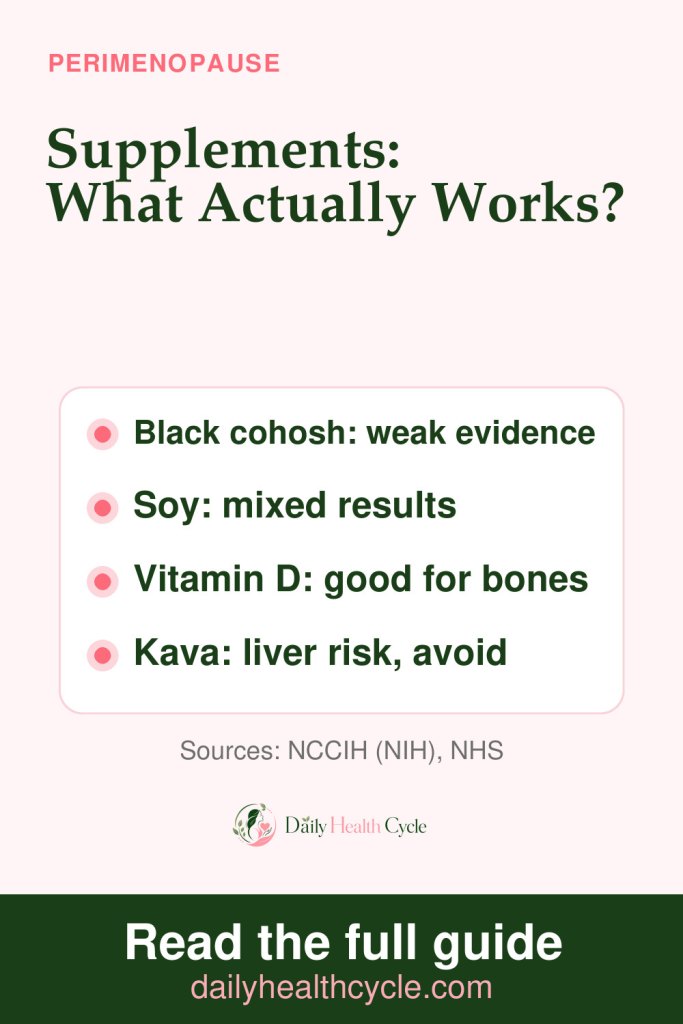
The US National Center for Complementary and Integrative Health (NCCIH) reviewed the research and found that most herbal and dietary supplements for menopause symptoms either haven’t been shown to work or have only weak, inconsistent results (NCCIH). The NHS similarly advises talking to a doctor before taking herbal supplements, because their quality varies and some interact with medicines (NHS).
| Supplement | What the evidence says | Main concern |
|---|---|---|
| Black cohosh | Not shown to relieve hot flashes consistently | Rare reports of liver damage |
| Soy isoflavones | Mixed results; small benefit in some studies | Generally safe as food |
| Flaxseed | No better than placebo for hot flashes | Few side effects |
| Vitamin E | About one fewer hot flash a day in one study | High doses can raise bleeding risk |
| Red clover | No consistent benefit | Unknown long-term safety |
| Dong quai | Not shown to help | Interacts with warfarin |
| DHEA | Uncertain | Possible liver harm |
| Kava | May ease anxiety, not hot flashes | Serious liver damage |
Black Cohosh
Black cohosh is the most popular menopause herb, but NCCIH says the research doesn’t consistently show it reduces hot flashes or night sweats. There have been rare cases of liver damage in people taking it. Stop and see a doctor if you notice tummy pain, dark urine or yellowing of the skin or eyes. If hot flashes are your main problem, our guide on how to stop hot flashes covers the treatments with stronger evidence.
Soy, Red Clover and Flaxseed
Soy and red clover contain isoflavones, plant compounds that act a little like weak estrogen. Results for hot flashes are inconsistent: some studies show a small effect, others none. Soy foods such as tofu, edamame and soy milk are a safe part of a healthy diet. Flaxseed has been tested too and, according to NCCIH, worked no better than a placebo for hot flashes.
Vitamins and Minerals Worth Knowing
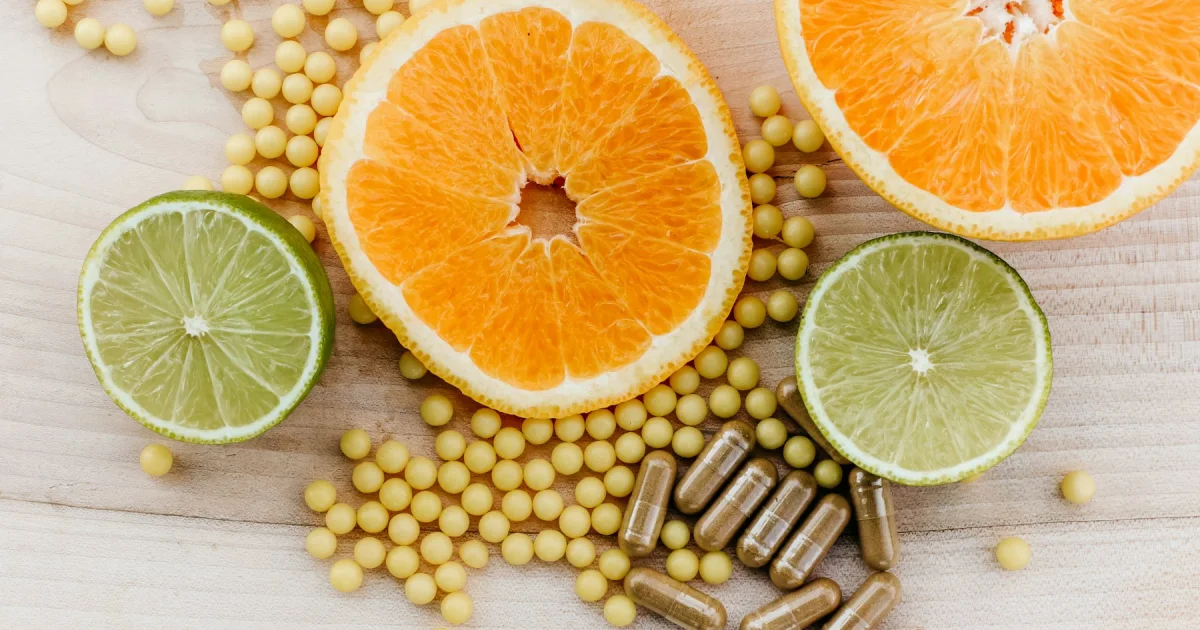
- Vitamin D: the NHS recommends that adults in the UK consider 10 micrograms a day, especially in autumn and winter. It supports bone health, which matters more as estrogen falls (NHS).
- Calcium: aim to get it from food first, such as dairy, fortified plant milks, tinned fish with bones and leafy greens. Ask a doctor before high-dose supplements.
- Vitamin E: one study found about one fewer hot flash a day, a small effect. Avoid high doses, especially if you take blood thinners.
- Iron: only if a blood test shows you need it, for example after heavy or irregular periods.
Magnesium is often marketed for perimenopause sleep and mood, but there’s little research specific to menopause. It’s generally safe at normal doses, though too much can cause diarrhoea and it isn’t suitable for people with kidney problems.
Supplements to Be Careful With
“Natural” doesn’t mean safe. NCCIH flags these risks:
- Kava has been linked to serious liver damage.
- DHEA has uncertain benefits and may harm the liver or raise hormone levels.
- Dong quai can interact with the blood thinner warfarin.
- St John’s wort, sometimes used for low mood, interacts with many medicines, including the pill and some antidepressants.
Supplements aren’t checked for effectiveness before they’re sold, and products can contain more or less than the label says. Always tell your doctor or pharmacist what you take.
What Works Better Than Supplements
For moderate or severe symptoms, hormone therapy is the most effective treatment for hot flashes and night sweats, and there are non-hormonal prescription options too. Our guide to HRT in perimenopause explains the choices. Lifestyle steps also help: regular exercise, cutting back on alcohol and caffeine, a cooler bedroom and stress relief. CBT (cognitive behavioural therapy) is recommended by the NHS for hot flashes, low mood and perimenopause anxiety.
Not sure what’s causing your symptoms? Start with our perimenopause symptoms checklist, then take it to your appointment.
When to See a Doctor
- Your symptoms affect your sleep, work or relationships.
- You take prescription medicines and want to add a supplement.
- You’ve had breast cancer or another hormone-sensitive condition, as some herbs act like estrogen.
- You notice signs of liver trouble: yellow skin or eyes, dark urine or tummy pain.
Free printable PDF
Perimenopause symptom & cycle tracker
A one-page PDF to print and fill in by hand: periods, sleep, hot flashes and mood, ready to bring to your appointment. Enter your email and the download link appears right away.
Prefer to track on your phone? Use our online symptom tracker, no email needed.
Keep reading: How to Stop Hot Flashes and What Is Perimenopause?
Frequently Asked Questions
What is the best supplement for perimenopause?
There’s no single supplement proven to relieve perimenopause symptoms. Vitamin D is the most widely recommended, mainly for bone health. For hot flashes, research on herbs such as black cohosh, soy and red clover is weak or mixed.
Does black cohosh work for perimenopause?
According to NCCIH, studies haven’t consistently shown that black cohosh relieves hot flashes or night sweats. There are rare reports of liver damage, so talk to your doctor first.
Is magnesium good for perimenopause?
Magnesium is popular for sleep and mood, but there’s little research on it for menopause specifically. Normal doses are generally safe, but too much can cause diarrhoea, and it isn’t suitable for people with kidney problems.
Can supplements replace HRT?
No. HRT is the most effective treatment for hot flashes and night sweats. Supplements haven’t been shown to work as well, and some carry risks. If HRT isn’t right for you, ask about non-hormonal prescription options.
Are menopause supplements safe?
Not always. Kava, DHEA and dong quai carry known risks, and St John’s wort interacts with many medicines. Supplements aren’t tested for effectiveness before sale, so check with a doctor or pharmacist.
Should I take vitamin D in perimenopause?
The NHS advises adults to consider 10 micrograms of vitamin D a day, especially in autumn and winter. It helps keep bones healthy, which matters more as estrogen levels fall.
Sources: Menopausal symptoms: in depth — NCCIH · Things you can do — NHS · Vitamin D — NHS · Black cohosh — NCCIH
About the author
Jessica Bordo writes Daily Health Cycle out of personal interest in women’s health, not as a clinician. She shares practical, source-linked content to help women feel more confident in their bodies, make informed choices, and build healthier everyday habits. More about Jessica
This article is for educational purposes only and isn’t a substitute for professional medical advice, diagnosis, or treatment. Read our medical disclaimer.
Sources cited in this article
- NCCIH: Menopausal symptoms in depth (nccih.nih.gov)
- NHS: Things you can do (nhs.uk)
- NHS: Vitamin d (nhs.uk)
- Black cohosh — NCCIH (nccih.nih.gov)
Last checked November 8, 2026. Spot an outdated source? Tell us.