

Last updated October 11, 2026. Educational information, not medical advice: see our Medical Disclaimer.
Everyone gets tired. But feeling drained for weeks, or so tired that it affects your daily life, is worth checking. MedlinePlus defines fatigue as a feeling of weariness, tiredness or lack of energy that can interfere with your usual daily activities (MedlinePlus). It’s a symptom rather than a diagnosis, and it has a long list of possible causes, from sleep and stress to iron deficiency, thyroid problems and hormonal changes. This guide covers the causes of constant fatigue in women: the most common ones, those that affect women more, what a doctor may check and when to get help.
Key Takeaways
- Fatigue is a symptom with many possible causes. The NHS says to see a GP if you’ve been tired for a few weeks and aren’t sure why, or if your tiredness affects your daily life (NHS).
- Common causes include poor sleep, stress, depression, some medicines, and conditions such as anemia, thyroid disease, diabetes and sleep apnea (MedlinePlus).
- Some causes are more common in women. Heavy periods and pregnancy are common causes of iron deficiency anemia (NHS), and Hashimoto’s disease, a cause of underactive thyroid, is most common in women and usually starts between 30 and 50 (NHS).
- Night sweats in perimenopause can wake you and leave you feeling tired and sluggish the next day (ACOG).
- Fatigue can occasionally point to heart disease. The CDC lists tiredness that won’t go away among women’s symptoms, and lists sudden fatigue, shortness of breath and swelling of the feet, ankles, legs or abdomen among the signs to call 9-1-1 for (CDC).
Not sure which one this is?
Perimenopause, menopause and PCOS share a lot of overlapping symptoms. Take our free 2-minute self-check for a starting point on what to read next and what to bring up with your doctor.
In this article:
- What Counts as Constant Fatigue?
- The Most Common Causes
- Causes That Affect Women More
- What a Doctor May Check
- What You Can Try in the Meantime
- When to See a Doctor
- Fatigue FAQ
- Your Next Step
What Counts as Constant Fatigue?
Tiredness after a bad night or a busy week is normal. The Endocrine Society notes that tiredness can also occur as part of a normal, busy life, and that symptoms like it are common and non-specific, meaning they appear in many different conditions (Endocrine Society). The NHS lists insufficient sleep or insomnia, an unhealthy lifestyle, stress, depression, bereavement, hormonal changes, illnesses such as glandular fever and COVID-19, and certain medicines as common causes (NHS).
Fatigue becomes worth investigating when it lasts for weeks, doesn’t improve with rest, or gets in the way of daily life. Both the NHS and MedlinePlus use “weeks” as the point to get it checked (NHS; MedlinePlus).
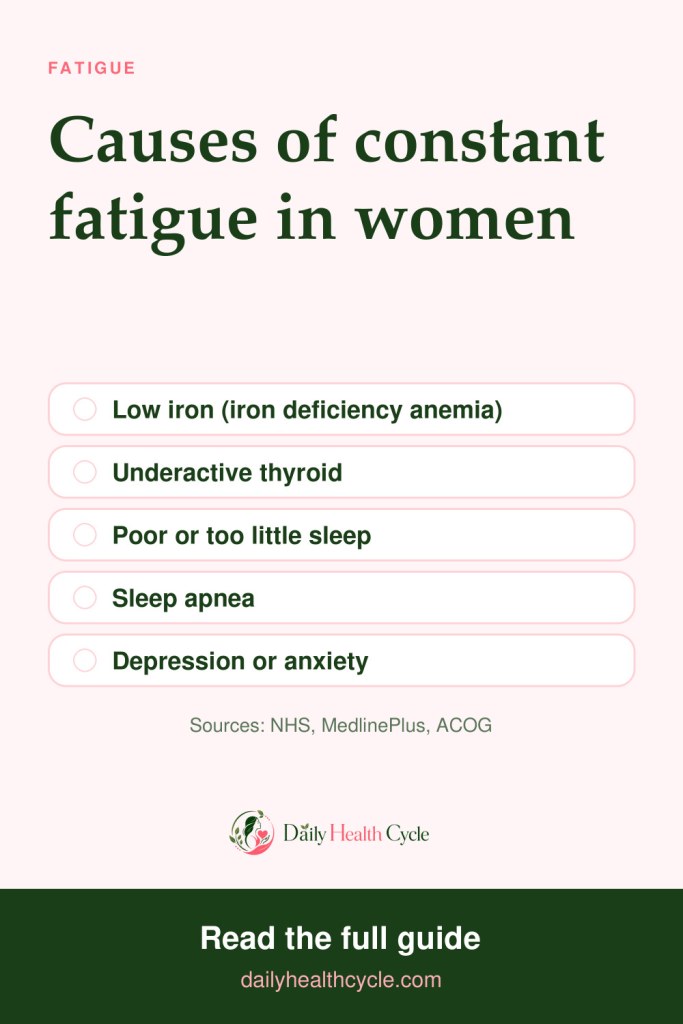
The Most Common Causes
These are the causes health authorities list most often. Several can occur together, which is one reason a single blood test rarely tells the whole story.
| Cause | What to know | Source |
|---|---|---|
| Poor or too little sleep | Insufficient sleep or insomnia is a common cause. The NHS suggests keeping to the same sleep times and aiming for 6 to 9 hours. | NHS |
| Sleep apnea | MedlinePlus lists it as a cause of fatigue. The NHS says to see a GP if you’ve been told you make gasping, snorting or choking noises while you sleep. | MedlinePlus; NHS |
| Iron deficiency anemia | Common symptoms are tiredness and lack of energy, shortness of breath and paler than usual skin. Heavy periods and pregnancy are common causes. A full blood count checks for it. | NHS |
| Underactive thyroid | Extreme tiredness, feeling cold, weight gain, low mood and trouble concentrating are listed symptoms. It’s diagnosed with TSH and T4 blood tests. | NHS |
| Depression and anxiety | MedlinePlus lists both as causes of fatigue, and the NHS lists depression, stress and bereavement. | MedlinePlus; NHS |
| Diabetes and other long-term conditions | MedlinePlus names diabetes and heart, liver, kidney, lung (COPD) and thyroid disease. | MedlinePlus |
| Medicines | MedlinePlus lists antidepressants, antihistamines and some nausea and pain relievers. The NHS lists chemotherapy. | MedlinePlus; NHS |
| Infections | The NHS lists glandular fever and COVID-19, and MedlinePlus lists infections generally. | NHS; MedlinePlus |
| Alcohol, caffeine and activity levels | MedlinePlus lists too much alcohol or caffeine, and too little or too much exercise. | MedlinePlus |
| ME/CFS (chronic fatigue syndrome) | Severe fatigue that isn’t improved by rest, symptoms that get worse after physical or mental activity, sleep problems and trouble thinking. Women are affected more often than men, and there is no specific test. | CDC |
Causes That Affect Women More
Heavy periods and iron deficiency
The NHS lists heavy periods and pregnancy as common causes of iron deficiency anemia (NHS). ACOG counts bleeding that soaks through one or more pads or tampons every hour, or that lasts more than 7 days, as abnormal (ACOG). If your periods are heavy and you’re tired, mention both. Our guide to irregular periods in perimenopause explains which bleeding patterns to raise. If your bleeding is also frequent, see our guide to period every 2 weeks in perimenopause.
Thyroid problems
Hashimoto’s disease, a common cause of an underactive thyroid, is most common in women and usually starts between 30 and 50. Fatigue is one of its listed symptoms, alongside weight gain, feeling cold and low mood (NHS). Our guide to hormonal imbalance symptoms covers thyroid problems and other hormone-related conditions.
Perimenopause and menopause
ACOG says night sweats may wake you up and leave you feeling tired and sluggish during the day (ACOG). Mayo Clinic adds that trouble sleeping is often due to hot flashes or night sweats, but not always: sleep patterns can change in perimenopause even without them (Mayo Clinic). See our perimenopause symptoms checklist, our guide to how to stop hot flashes and our complete perimenopause and menopause guide. If anxiety is part of the picture, see our guide to perimenopause anxiety.
PCOS
The Office on Women’s Health links PCOS with sleep apnea, depression, anxiety and diabetes (Office on Women’s Health), all of which can cause fatigue.
Heart disease
Heart disease can look different in women. The CDC lists tiredness that won’t go away or feels excessive among women’s symptoms, and lists sudden fatigue, shortness of breath and swelling of the feet, ankles, legs or abdomen among the signs to call 9-1-1 for (CDC). Fatigue on its own has many other causes, but new, unusual tiredness alongside other symptoms shouldn’t be brushed off. If you also notice a racing or irregular heartbeat, our guide to perimenopause heart palpitations explains when it needs a check.
What a Doctor May Check
MedlinePlus says a provider will ask about your sleep, activities, appetite and exercise, do a physical exam, and order lab tests (MedlinePlus). Depending on your other symptoms, that can include a full blood count to check for iron deficiency anemia (NHS) and blood tests for thyroid-stimulating hormone (TSH) and thyroxine (T4) (NHS). If you snore or have been told you gasp or choke in your sleep, say so, since the NHS lists that as a reason to see a GP. A short diary of your sleep, periods and energy levels before the visit helps.
What You Can Try in the Meantime
The NHS suggests these steps for tiredness (NHS):
- Eat a healthy diet and exercise regularly.
- Keep to the same sleep times and aim for 6 to 9 hours of sleep.
- Wind down before bed, for example by reading or listening to music, and keep your bedroom comfortable.
- Avoid caffeine, food and exercise in the 2 hours before sleep, and don’t use screens in the hour before sleep.
- Don’t smoke, and don’t drink too much alcohol.
- Find ways to manage stress (MedlinePlus).
Get a blood test before assuming you’re low in iron. The NHS describes iron tablets as a treatment for diagnosed iron deficiency anemia, usually for around 6 months (NHS). Be wary, too, of an “adrenal fatigue” diagnosis or supplements sold for it. The Endocrine Society says no scientific proof exists that it is a true medical condition, and warns that supplements marketed for adrenal health lack FDA oversight and may cause harm (Endocrine Society).
When to See a Doctor
Consider booking an appointment if:
- You’ve been tired for a few weeks and aren’t sure why, or your tiredness affects your daily life (NHS).
- You’re tired and also have other symptoms, such as weight loss or mood changes (NHS).
- You’ve been told you make gasping, snorting or choking noises while you sleep (NHS).
- Your periods are heavy or last more than 7 days (ACOG).
- You feel low or hopeless much of the time. If you’re thinking about harming yourself, call or text 988 in the U.S.
- Call 9-1-1 for chest pain or discomfort, shortness of breath, dizziness, palpitations, sudden fatigue, or swelling of the feet, ankles, legs or abdomen. The CDC says not to delay (CDC).
Our appointment steps explain what to bring and what to ask.
Keep reading: Insulin Resistance Symptoms in Women: Signs, Tests and What Helps.
Fatigue FAQ
Why am I always tired even after sleeping 8 hours?
Sleep length isn’t the only factor. Poor-quality sleep, sleep apnea, anemia, an underactive thyroid, depression, medicines and infections can all cause fatigue (NHS; MedlinePlus). If it lasts for weeks, get checked.
Is constant fatigue a sign of perimenopause?
It can be part of it, mainly when night sweats or sleep changes disrupt your rest (ACOG), but fatigue has many other possible causes, so it’s worth ruling them out. Our symptoms checklist can help you spot a wider pattern.
Can low iron cause tiredness?
Yes. The NHS lists tiredness and lack of energy among the common symptoms of iron deficiency anemia, alongside shortness of breath and paler skin, and heavy periods are a common cause (NHS). A full blood count checks for it.
What is adrenal fatigue?
The Endocrine Society says no scientific proof exists to support adrenal fatigue as a true medical condition. It says people given that label may actually have adrenal insufficiency, depression, obstructive sleep apnea or other health problems, so it’s worth getting the underlying cause checked (Endocrine Society).
Could it be chronic fatigue syndrome (ME/CFS)?
The CDC describes ME/CFS as a serious, often long-lasting illness with severe fatigue not improved by rest, symptoms that can get worse after physical or mental activity, sleep problems and trouble thinking. Women are affected more often than men, there is no specific test, and more than 9 in 10 people with ME/CFS have not been diagnosed (CDC). If that pattern sounds familiar, tell your doctor.
What is constant fatigue a symptom of?
Many things. Common causes include poor sleep, sleep apnea, iron deficiency anemia, an underactive thyroid, depression and anxiety, diabetes and other long-term conditions, some medicines, infections, and too much alcohol or caffeine (NHS; MedlinePlus). Several can happen together, which is why a doctor may suggest blood tests.
When should I worry about being tired all the time?
See a doctor if you’ve been tired for a few weeks and don’t know why, if it’s affecting your daily life, or if it comes with other symptoms such as weight loss or mood changes (NHS). Call 911 for tiredness with chest pain, shortness of breath, dizziness, palpitations or sudden swelling of the feet, ankles, legs or abdomen (CDC).
Your Next Step
For a couple of weeks, note when you’re tired, how you’re sleeping, your period pattern and any other symptoms, then book a visit and bring your notes. For related reading, see our guides on hormonal imbalance symptoms, irregular periods in perimenopause, the perimenopause symptoms checklist, how to stop hot flashes and our complete perimenopause and menopause guide.
Sources: Tiredness and fatigue — NHS · Fatigue — MedlinePlus · Iron deficiency anaemia — NHS · Underactive thyroid — NHS · Women and heart disease — CDC · ME/CFS — CDC · The Menopause Years — ACOG · Abnormal uterine bleeding — ACOG · Perimenopause — Mayo Clinic · Polycystic ovary syndrome — Office on Women’s Health · Adrenal fatigue — Endocrine Society · Featured image: Shixart1985 / Wikimedia Commons (CC BY 2.0)
Free printable
Perimenopause symptom & cycle tracker
Track your periods, sleep, hot flashes and mood on one page, then bring it to your appointment. Enter your email to download it.
About the author: Jessica Bordo writes Daily Health Cycle out of personal interest in women’s health, not as a clinician. She summarizes what sources such as the NHS, ACOG, CDC and The Menopause Society say and links to them so you can check the claims yourself. Use these guides to prepare questions for your own clinician, not to replace their advice. Our authors page explains how we source and check articles.
This article is for general education and isn’t medical advice. Read our Medical Disclaimer and talk with a qualified clinician about your own care.