
Last updated November 27, 2026. Educational information, not medical advice: see our Medical Disclaimer.
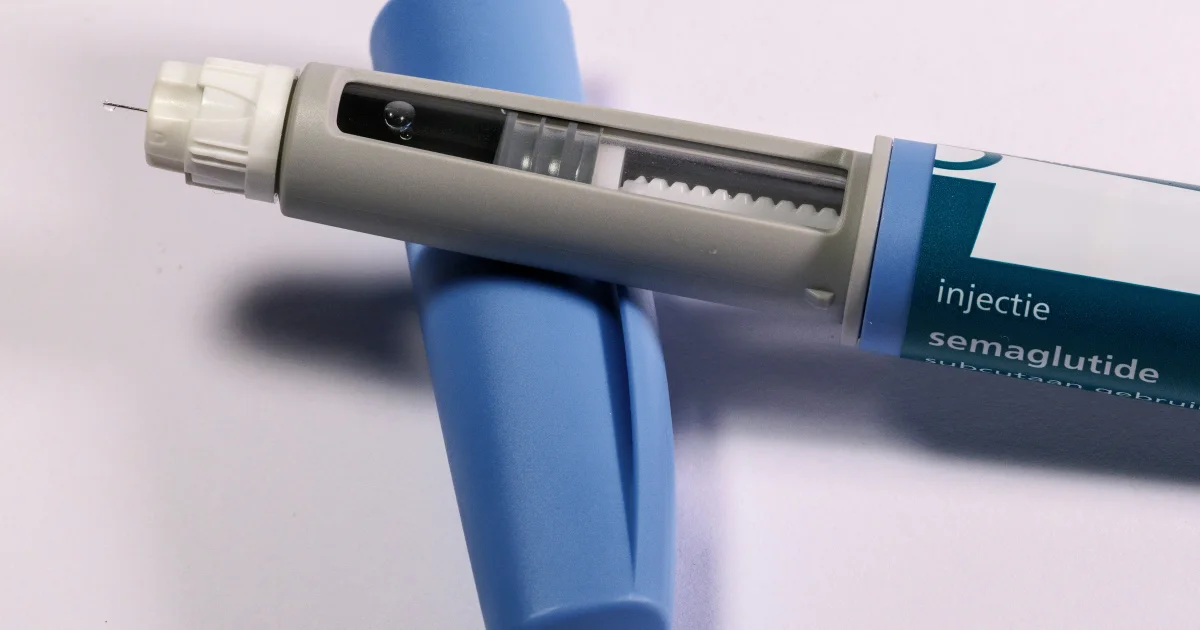
Quick answer: Microdosing a GLP-1 means taking less than the approved dose of a medicine such as semaglutide or tirzepatide, usually hoping for fewer side effects or a lower bill. No trial has tested it, in menopause or in anyone else. The FDA has not approved a microdose, and the American Association of Clinical Endocrinology (AACE) does not support it in routine care. Most microdoses come from compounded vials, where the FDA has seen dosing errors of 5 to 20 times the intended amount. If a smaller dose appeals to you, raise it with your prescriber rather than adjusting it yourself.
Search for GLP-1 microdosing in menopause and you will find clinics and telehealth companies promising a gentler way to shift midlife weight, calm inflammation and even ease hot flashes. We looked at what the FDA, the AACE, the trials behind these medicines and the doctors interviewed by AARP and NewYork-Presbyterian actually say. This guide explains what microdosing means, why it appeals to women in their 40s and 50s, what the evidence shows, the real risks, and what to ask instead. For the bigger picture on these medicines in midlife, start with our guide to GLP-1 medicines in menopause.
What “microdosing” a GLP-1 means
As AARP points out, microdosing is not a defined medical term. People use it to mean three different things:
- Taking a smaller dose than the approved one, for example staying on a starter dose long term.
- Taking less than you were prescribed, such as drawing up part of a dose from a vial.
- Spacing doses further apart than the weekly schedule on the label.
NewYork-Presbyterian describes it as taking a fraction of the FDA-approved dose, which makes it off-label use that clinical research does not support. Its reviewing endocrinologist, Dr. Judy Korner, says microdosing is “not an officially recognized standard of care.”
Why it appeals to women in midlife
The reasons are understandable, and AARP’s reporting lists the main ones:
- Side effects. Nausea, vomiting, constipation and diarrhoea are common at full doses. A Cleveland Clinic study cited by AARP found that nearly 15% of people who stopped a GLP-1 gave side effects as the reason. Our guide to GLP-1 side effects in women covers them in detail.
- Cost. Out-of-pocket prices can reach about $1,300 a month, and nearly half of the people in that study who stopped did so for financial reasons.
- Keeping weight off. Some people want to step down slowly after reaching a goal rather than stop outright.
- Social media. A 2025 Tebra survey of 640 GLP-1 users, reported by AARP, found that 36% said they microdose, most after learning about it online.
Perimenopause adds its own pull. Weight tends to shift toward the middle in these years, as our guides to perimenopause weight gain and menopause belly fat explain, and a “gentle” low dose sounds like a reasonable middle path. The trouble is that nobody has shown it works.
What the evidence says
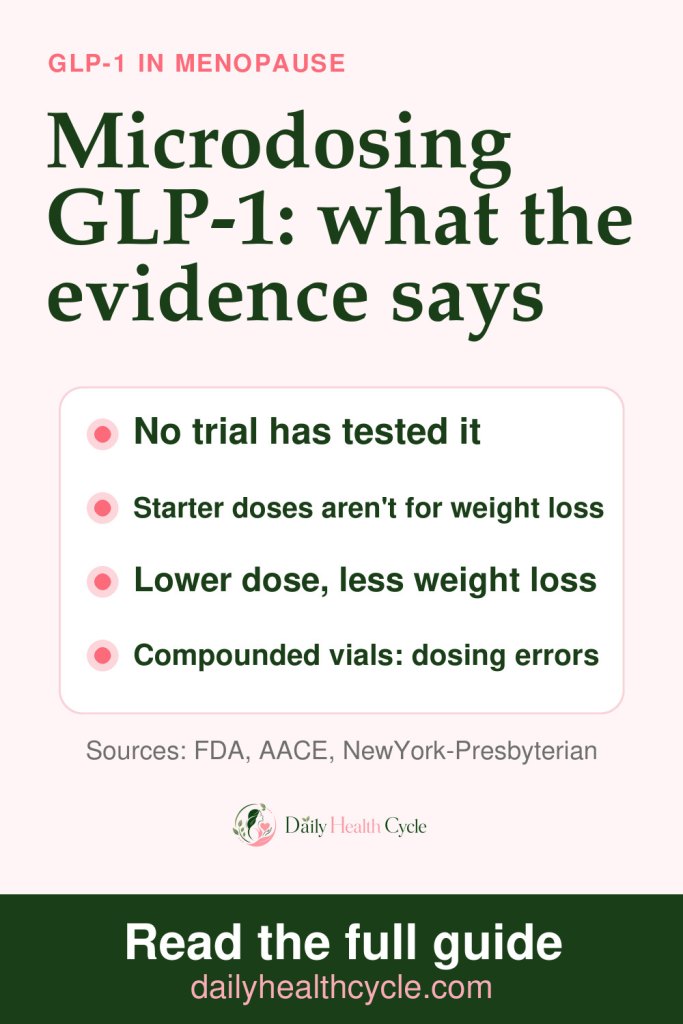
The short version: there is no published trial of GLP-1 microdosing, for menopause or for anything else. The AACE says there is an absence of peer-reviewed evidence that it is effective or safe. NewYork-Presbyterian notes there are no published studies of lower doses, so it is hard to say whether they even reduce side effects, and that a lower dose will likely be less effective for most people.
What the trials do show is that, within the tested range, more drug means more weight loss. In the STEP 2 trial, adults with overweight and type 2 diabetes lost about 9.6% of their body weight on semaglutide 2.4 mg, 7.0% on 1.0 mg and 3.4% on placebo over 68 weeks. Gastrointestinal side effects were only slightly less common on the lower dose (57.5% against 63.5%). That trial did not test anything close to a microdose.
The starter doses people often stay on were never designed to cause weight loss. They exist so the body can get used to the drug before the dose goes up:
| Medicine | Starting dose (4 weeks) | Approved maintenance dose | Is the starting dose meant for weight loss? |
|---|---|---|---|
| Wegovy (semaglutide injection) | 0.25 mg once a week | 1.7 mg or 2.4 mg once a week | No, it is a step to reduce stomach side effects |
| Zepbound (tirzepatide) | 2.5 mg once a week | 5 mg, 10 mg or 15 mg once a week | No, the label says 2.5 mg is not a maintenance dose |
There is also a benefit you could lose. In the SELECT trial, semaglutide 2.4 mg cut heart attacks, strokes and cardiovascular deaths by 20% in people with overweight and heart disease who did not have diabetes. Nobody knows whether a microdose keeps any of that protection. Yale physician Dr. Reshma Ramachandran told AARP that lowering the dose could reduce heart and kidney benefits, and that there is no evidence behind the anti-inflammatory claims made for microdosing online.
Does microdosing help menopause symptoms?
There is no evidence that it does. GLP-1 medicines are approved for type 2 diabetes, weight management and, for some, heart and kidney protection. None is approved to treat hot flashes, night sweats, brain fog or mood changes, and no trial has tested a low dose for these symptoms. Claims that microdosing “balances hormones” come from marketing, not research.
If menopause symptoms are the main problem, hormone therapy and the non-hormonal treatments in our GLP-1 and menopause guide have far more evidence behind them. A GLP-1 and hormone therapy can be used together when there is a reason for both, but that is a decision for your doctor.
The risks
Most microdoses come from compounded vials
Approved pens deliver set doses, which makes them hard to split. That is why most microdosing programmes use compounded semaglutide or tirzepatide in multiple-dose vials. The FDA does not review compounded drugs for safety, effectiveness or quality before they are sold. It says they should only be used when an approved drug cannot meet a patient’s needs, and only from a state-licensed pharmacy. As of 31 May 2026 it had received 990 adverse event reports for compounded semaglutide and more than 730 for compounded tirzepatide, and it believes the real numbers are higher.
NewYork-Presbyterian adds that products bought online may contain unknown ingredients, may not be sterile, or may contain no active medicine at all.
Dosing errors are easy to make
Measuring a tiny dose from a vial is exactly where things go wrong. In a 2024 safety alert, the FDA reported patients drawing up 5 to 20 times their intended dose. The causes were inexperience with syringes, confusion between milligrams, millilitres and “units”, and prescribers miscalculating conversions. Some patients needed hospital care for vomiting, dehydration, fainting, gallstones or pancreatitis. The FDA also advises discarding a multiple-dose vial 28 days after first use, because the risk of contamination rises after that.
Side effects do not disappear
Even at lower doses, the usual GLP-1 side effects can occur. NewYork-Presbyterian lists severe vomiting, diarrhoea, constipation, gallstones and pancreatitis. In midlife there is a further concern: weight lost on these medicines includes some muscle, and women are already losing muscle and bone as oestrogen falls. Strength training and enough protein matter whatever dose you take.
What to do instead
Every reason people give for microdosing has a safer route through your prescriber:
| If your goal is… | Ask your prescriber about |
|---|---|
| Fewer side effects | Staying longer on a dose before increasing it, eating smaller meals, and treating nausea or constipation early |
| Lower cost | Insurance coverage, manufacturer programmes and whether another approved medicine would cost less |
| Keeping weight off after your goal | A planned maintenance dose or a switch to a less potent GLP-1, which one doctor interviewed by AARP says she uses with her patients |
| Menopause symptoms | Hormone therapy or non-hormonal treatments, which are tested for these symptoms |
| Midlife weight without medication | Strength training, protein, sleep and checking for insulin resistance |
If you are thinking of stopping altogether, read our guide to stopping a GLP-1 first: much of the weight tends to come back without a plan.
Questions to ask before you change your dose
- Is the dose I am on actually doing anything for my weight, blood sugar or heart risk?
- Can we slow the dose increases instead of lowering the dose?
- If I use a compounded product, which licensed pharmacy makes it, and how exactly do I measure my dose?
- Would hormone therapy help the symptoms I am trying to fix?
- What should I do to protect my muscle and bone while I lose weight?
Microdosing GLP-1 FAQ
What is microdosing a GLP-1?
It means taking less than the approved dose of a GLP-1 medicine such as semaglutide or tirzepatide, taking less than prescribed, or spacing doses further apart. It is not a defined medical term and is not an approved way to use these medicines.
Does microdosing GLP-1 work for menopause weight gain?
No trial has tested it. In the trials that exist, lower doses produced less weight loss than higher ones, and the starting doses are meant to help your body adjust, not to cause weight loss.
Can microdosing a GLP-1 help hot flashes?
There is no evidence that it does. No GLP-1 medicine is approved to treat hot flashes or other menopause symptoms. Hormone therapy and some non-hormonal medicines are tested for this.
Is microdosing a GLP-1 safe?
Its safety has not been studied. The bigger risks come from compounded vials: the FDA has reported people injecting 5 to 20 times their intended dose by mistake, and compounded products are not reviewed by the FDA before sale.
Does a lower dose mean fewer side effects?
Not necessarily. In one trial, stomach side effects were only slightly less common on a lower semaglutide dose than a higher one. Slowing the dose increases with your prescriber is the tested way to reduce them.
What do doctors say about GLP-1 microdosing?
The American Association of Clinical Endocrinology does not support it in routine care and recommends sticking to FDA-approved dosing. Doctors interviewed by AARP and NewYork-Presbyterian say the evidence is not there yet.
Sources
- AACE: GLP-1RA microdosing trend continues despite “anecdotal evidence” (October 2025)
- NewYork-Presbyterian: What is GLP-1 microdosing? (March 2026)
- AARP: Why are people microdosing GLP-1 medications, and does it work? (August 2026)
- FDA: Concerns with unapproved GLP-1 drugs used for weight loss
- FDA: Dosing errors associated with compounded injectable semaglutide (July 2024)
- Davies et al. (2021): Semaglutide 2.4 mg in adults with overweight or obesity and type 2 diabetes (STEP 2), The Lancet
- Lincoff et al. (2023): Semaglutide and cardiovascular outcomes in obesity without diabetes (SELECT), NEJM
- Eli Lilly: Zepbound US prescribing information
Sources last checked: November 19, 2026.
Free printable PDF
Perimenopause symptom & cycle tracker
A one-page PDF to print and fill in by hand: periods, sleep, hot flashes and mood, ready to bring to your appointment. Enter your email and the download link appears right away.
Prefer to track on your phone? Use our online symptom tracker, no email needed.
This article is for general education and isn’t medical advice. See our full disclaimer and talk with a qualified clinician about your own care.
Sources cited in this article
- AARP: Microdosing glp1 drugs for weight loss (aarp.org)
- NewYork-Presbyterian: What is glp 1 microdosing (nyp.org)
- STEP 2 trial (pubmed.ncbi.nlm.nih.gov)
- Zepbound (uspl.lilly.com)
- SELECT trial: NEJMoa2307563 (nejm.org)
- FDA: Fdas concerns unapproved glp 1 drugs used weight loss (fda.gov)
- 2024 safety alert (fda.gov)
- AACE: GLP-1RA microdosing trend continues despite “anecdotal evidence” (October 2025) (aace.com)
- LinkedIn: Emma bordo a679ba450 (linkedin.com)
Last checked November 19, 2026. Spot an outdated source? Tell us.