
Last updated November 17, 2026. Educational information, not medical advice: see our Medical Disclaimer.
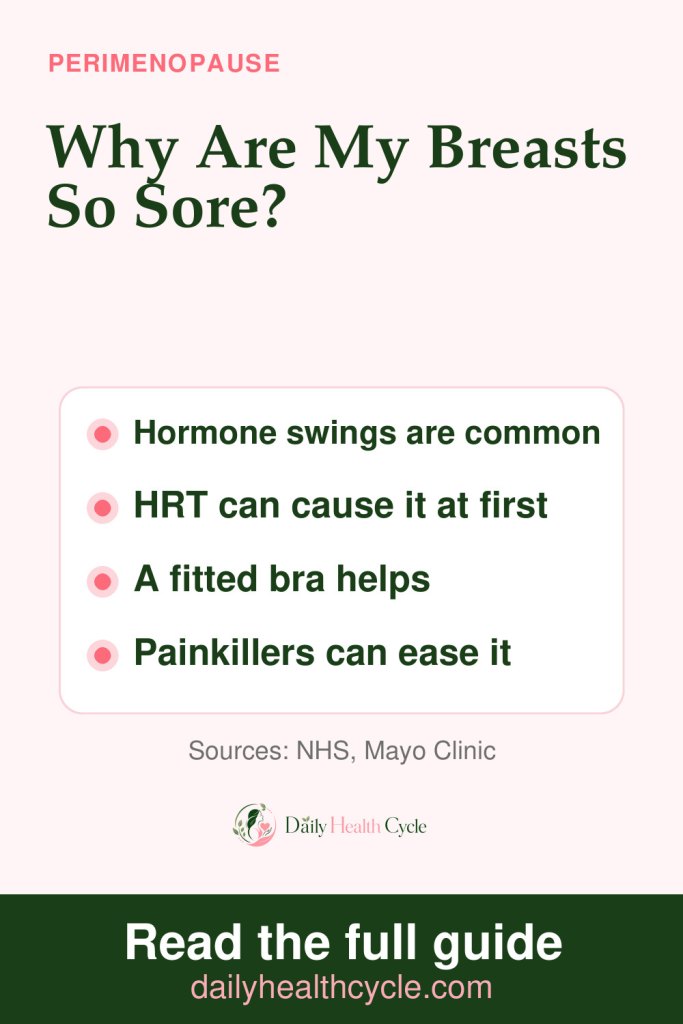
Quick answer: Yes, perimenopause can cause sore, tender breasts. Estrogen and progesterone rise and fall unpredictably, which can make breasts ache, swell or feel lumpy. A well-fitted bra and simple painkillers usually help. See a doctor if you find a lump, notice nipple or skin changes, or the pain doesn’t settle.
Key Takeaways
- Hormone swings in perimenopause are a common cause of breast pain (NHS).
- Starting HRT can cause tenderness that often settles in a few months.
- Sore breasts can also be an early sign of pregnancy.
- A supportive bra, paracetamol or ibuprofen are the first things to try.
- See a GP for a lump, nipple changes or skin dimpling.
Sore, tender or swollen breasts are something many women link to their period or to pregnancy, so it can be confusing when they show up in your 40s for no obvious reason. Hormone swings in perimenopause are a common cause. Here’s why it happens, what helps, and the signs that mean you should get checked.
Why Perimenopause Can Make Your Breasts Sore
Breast tissue responds to estrogen and progesterone. In perimenopause these hormones don’t fall smoothly. Estrogen can spike higher than usual in some cycles and drop sharply in others. The NHS lists hormone changes, including those around the menopause, among the common causes of breast pain (NHS). Mayo Clinic also lists breast tenderness among perimenopause signs (Mayo Clinic).
Because your cycles are less predictable, the soreness can feel random: worse in some months, absent in others, sometimes lasting longer than the PMS tenderness you used to have. It usually eases once periods stop for good. Learn more about the stage you’re in with what perimenopause is.
What It Usually Feels Like
- A dull, heavy ache or fullness in both breasts
- Tenderness when you touch them, wear a bra or lie on your front
- Swelling or lumpiness that comes and goes
- Pain that spreads toward the armpit
Pain linked to hormones usually affects both breasts. Pain in one specific spot that doesn’t go away is worth getting checked.
Other Causes to Rule Out
- Pregnancy: sore breasts are an early pregnancy sign, and you can still get pregnant in perimenopause. Read can you get pregnant during perimenopause.
- HRT: breast tenderness is a common side effect when you start hormone therapy, and it often settles within a few months (NHS).
- Medicines: some antidepressants and other drugs can cause breast pain.
- A poorly fitting bra or strain in the chest muscles.
- Infection (mastitis) or a cyst.
What Helps
The NHS suggests these steps for breast pain:
- Wear a well-fitted, supportive bra, and a soft one at night if that helps.
- Wear a sports bra when you exercise.
- Take paracetamol or ibuprofen, or try an anti-inflammatory gel rubbed on the sore area.
- Use a warm compress or a cool pack, whichever feels better.
Many women try cutting down on caffeine, and some find it helps, though the evidence is limited. The NHS notes that there’s little evidence that vitamin E or evening primrose oil help. If HRT is the cause, don’t stop it suddenly: speak to your doctor, as a change in dose or type may help. Our guide to HRT in perimenopause explains the options.
Keeping a note of when the pain happens alongside your periods can help you and your doctor spot a pattern. Our perimenopause symptoms checklist is a good place to start.
When to See a Doctor
Breast pain on its own is rarely a sign of breast cancer. But the NHS advises seeing a GP if you notice:
- A lump or thickening in your breast or armpit
- A change in the size or shape of a breast
- Dimpling or puckering of the skin
- A change in your nipple, such as it turning inward, a rash, or discharge
- Pain that doesn’t improve after a few weeks or affects your daily life
- A family history of breast cancer
Get urgent help if a breast is hot, red and swollen, or you have a high temperature or feel unwell, as this could be an infection that needs treatment quickly.
Keep up with breast screening when you’re invited, and check your breasts regularly so you know what’s normal for you.
Free printable PDF
Perimenopause symptom & cycle tracker
A one-page PDF to print and fill in by hand: periods, sleep, hot flashes and mood, ready to bring to your appointment. Enter your email and the download link appears right away.
Prefer to track on your phone? Use our online symptom tracker, no email needed.
Keep reading: What Is Perimenopause? and Perimenopause Symptoms Checklist for Your 40s
Frequently Asked Questions
Can perimenopause cause sore breasts?
Yes. Estrogen and progesterone levels swing unpredictably in perimenopause, and breast tissue responds to them. This can cause aching, swelling and tenderness, often in both breasts.
How long does breast tenderness last in perimenopause?
It varies. It can come and go with your cycles and may last longer than PMS tenderness. It usually eases once your periods stop and hormone levels settle after menopause.
Is breast pain a sign of cancer?
Breast pain on its own is rarely a sign of breast cancer. But see a doctor if you have a lump, changes to your nipple or skin, or pain in one spot that doesn’t go away.
Can HRT make your breasts sore?
Yes. Breast tenderness is a common side effect when you start HRT and often settles within a few months. If it doesn’t, your doctor may change the dose or type.
What helps sore breasts in perimenopause?
A well-fitted, supportive bra, a sports bra for exercise, and paracetamol or ibuprofen can help. A warm or cool compress may also ease the ache.
Could sore breasts in your 40s mean pregnancy?
It could. Sore breasts are an early pregnancy sign, and pregnancy is still possible in perimenopause. If your period is late, take a pregnancy test.
Sources: Breast pain — NHS · Perimenopause — Mayo Clinic · Side effects of HRT — NHS
About the author
Jessica Bordo writes Daily Health Cycle out of personal interest in women’s health, not as a clinician. She shares practical, source-linked content to help women feel more confident in their bodies, make informed choices, and build healthier everyday habits. More about Jessica
This article is for educational purposes only and isn’t a substitute for professional medical advice, diagnosis, or treatment. Read our medical disclaimer.
Sources cited in this article
- NHS: Breast pain (nhs.uk)
- Mayo Clinic: Syc 20354666 (mayoclinic.org)
- NHS: Side effects of hormone replacement therapy hrt (nhs.uk)
Last checked November 17, 2026. Spot an outdated source? Tell us.