Last updated November 16, 2026. Educational information, not medical advice: see our Medical Disclaimer.
Skin that suddenly feels dry, tight or itchy, even though you haven’t changed your soap or your routine, is something many women notice in their 40s and 50s. It’s easy to dismiss as winter weather or getting older, but falling estrogen plays a real part. Understanding why it happens makes it easier to fix, and to spot the times when itching needs a doctor.
Quick answer: Perimenopause itchy skin is common. The NHS lists dry and itchy skin as a menopause symptom, and the American Academy of Dermatology says skin holds less water during menopause, so it can get very dry. Use an unperfumed moisturiser every day, take shorter, cooler showers and wear loose cotton clothing. See a GP if itching is all over your body, severe or keeps coming back.
Key Takeaways
- The NHS lists skin changes, including dry and itchy skin, as a symptom of perimenopause and menopause.
- The American Academy of Dermatology says skin loses some ability to hold water in menopause, and loses about 30% of its collagen in the first five years.
- The basics help most: an unperfumed moisturiser or emollient used regularly, a mild cleanser instead of soap, and shorter showers (NHS; AAD).
- Itching around the vulva is often caused by vaginal dryness, which is very treatable.
- Itching can also be a sign of thyroid, liver or kidney problems, so see a GP if it’s all over your body, severe or doesn’t improve (NHS).
Why Perimenopause Can Make Your Skin Itch
The NHS lists skin changes, including dry and itchy skin, among the symptoms of perimenopause and menopause. Estrogen helps your skin hold on to moisture and stay thick and supple, so as levels fall, the skin changes.
The American Academy of Dermatology (AAD) explains that in menopause, skin loses some of its ability to hold water, so it can get quite dry. It also notes that women’s skin loses about 30% of its collagen during the first five years of menopause, which makes it thinner. Dry, thinner skin is more easily irritated, and that can show up as itching.
Where You May Notice It
- Arms, legs and back: dry, tight skin, often worse after a hot shower or in cold, dry weather
- Face and neck: skin that feels drier or more sensitive than before
- Vulva and vagina: itching, burning or soreness. The NHS lists these as vaginal symptoms of menopause, caused by lower estrogen. See our guide to vaginal dryness in perimenopause for treatments that work, including low-dose vaginal estrogen.
Vulval itching also has other common causes, such as yeast infections, so if it’s new or comes with unusual discharge, it’s worth reading our guide to BV vs yeast infection and getting checked.
What Helps
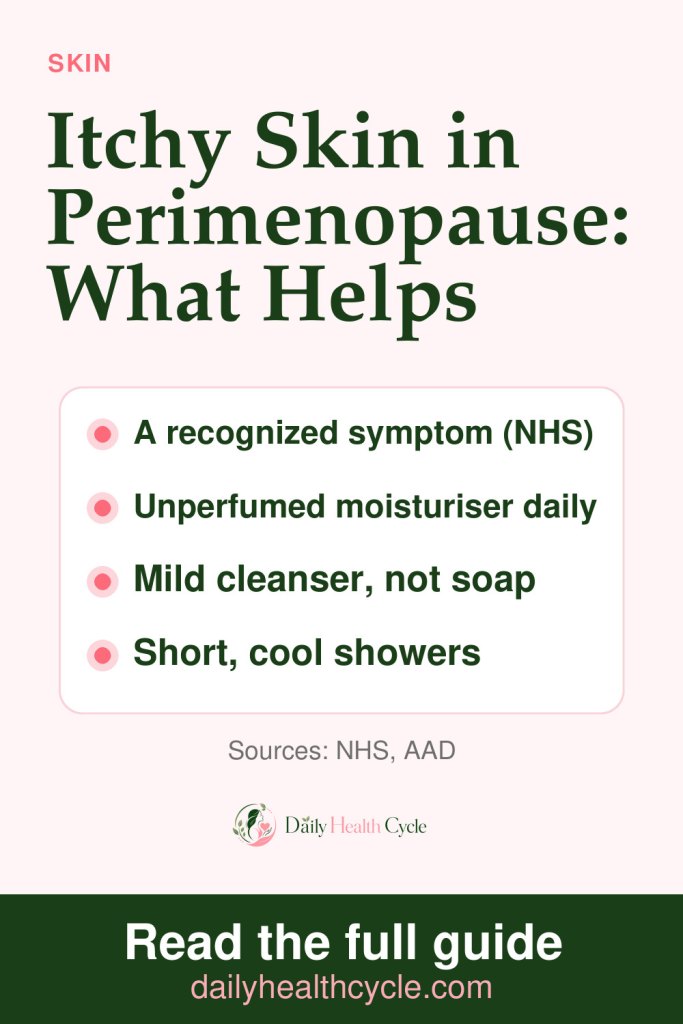
The NHS and the AAD recommend simple, gentle skin care:
Do
- Use an unperfumed moisturiser or emollient regularly (NHS). The AAD suggests applying moisturiser after bathing and whenever your skin feels dry during the day.
- Wash with a mild cleanser instead of soap (AAD).
- Pat or tap itchy skin instead of scratching, or hold something cool on it, such as a damp towel (NHS).
- Wear loose cotton or silk clothing (NHS).
- Use a broad-spectrum sunscreen with SPF 30 or higher every day to protect thinning skin (AAD).
Don’t
- Spend a long time in the bath or shower (NHS)
- Use perfumed soaps, deodorants or moisturisers (NHS)
- Wear tight clothes, or wool and synthetic fabrics (NHS)
Many women find that heat and sweating make itching worse, so the same steps that help night sweats, such as a cooler bedroom and lighter bedding, can help itchy skin at night too.
Other Causes of Itching
Not all itching is hormonal. The NHS lists common causes such as skin reactions to heat or allergens, long-term skin conditions like eczema, fungal skin infections, and insects or parasites on the skin. Less commonly, itching can be a sign of thyroid, liver or kidney problems.
Some of these overlap with perimenopause symptoms. For example, an underactive thyroid can also cause tiredness and weight gain. If your itching comes with other new symptoms, mention them all to your doctor. Our guide to hormonal imbalance symptoms covers the common blood tests.
When to See a Doctor
The NHS advises seeing a GP if your itching:
- Is affecting your daily life or sleep
- Doesn’t get better with self-care or keeps coming back
- Is caused by a new rash, lump or swelling that worries you
- Is all over your body
- Is severe
The AAD also recommends seeing a dermatologist if a rash lasts, a skin condition gets worse, or your skin still feels dry despite moisturising. If you’re having other menopause symptoms too, ask your doctor whether treatment for those, such as HRT, might be right for you.
Itchy Skin FAQ
Can perimenopause cause itchy skin?
Yes. The NHS lists skin changes, including dry and itchy skin, as a symptom of perimenopause and menopause. Falling estrogen means skin holds less water and loses collagen, so it gets drier and more easily irritated.
What is the best moisturiser for menopause itchy skin?
An unperfumed moisturiser or emollient, used regularly, is what the NHS recommends. The American Academy of Dermatology suggests applying it after bathing and whenever your skin feels dry. Avoid perfumed products, which can make itching worse.
Why is my vulva itchy in perimenopause?
Lower estrogen can make vaginal and vulval tissue dry, which can cause itching, burning and soreness. It’s very treatable, often with moisturisers or low-dose vaginal estrogen. Yeast infections and other conditions can cause similar symptoms, so get checked if it’s new or you have unusual discharge.
Does HRT help itchy skin?
HRT isn’t usually prescribed for itchy skin alone, but it treats the low estrogen behind many menopause symptoms. If you have other symptoms such as hot flashes, ask your doctor whether HRT might help. For vulval itching from dryness, low-dose vaginal estrogen is a common option.
When is itchy skin a sign of something serious?
The NHS says to see a GP if itching is all over your body, severe, doesn’t improve with self-care, keeps coming back, or comes with a new rash, lump or swelling. Less commonly, itching can be a sign of thyroid, liver or kidney problems.
Your Next Step
Switch to an unperfumed moisturiser and a soap-free wash, and keep showers short and lukewarm for two weeks. If the itching doesn’t improve, spreads, or comes with other new symptoms, book a GP appointment and mention any perimenopause symptoms you’ve noticed.
Free printable PDF
Perimenopause symptom & cycle tracker
A one-page PDF to print and fill in by hand: periods, sleep, hot flashes and mood, ready to bring to your appointment. Enter your email and the download link appears right away.
Prefer to track on your phone? Use our online symptom tracker, no email needed.
Sources cited in this article
- NHS: Symptoms (nhs.uk)
- American Academy of Dermatology (AAD): Skin care during menopause (aad.org)
- NHS: Itchy skin (nhs.uk)
Last checked November 16, 2026. Spot an outdated source? Tell us.
About the author: Jessica Bordo writes Daily Health Cycle out of personal interest in women’s health, not as a clinician. Each article summarizes what sources such as the NHS, NICE and published studies say, and links to them so you can check the claims yourself. Use these guides to prepare questions for your own clinician, not to replace their advice. Our editorial standards explain how we research and update articles.
This article is for general education and isn’t medical advice. See our full disclaimer and talk with a qualified clinician about your own care.