Last updated November 8, 2026. Educational information, not medical advice: see our Medical Disclaimer.
Stiff knees in the morning, aching hands, sore shoulders: joint pain is one of the most common but least talked-about symptoms of the menopause transition. Many women assume it’s just age or the start of arthritis. Sometimes it is, but falling estrogen also plays a part, and knowing the difference helps you get the right help.
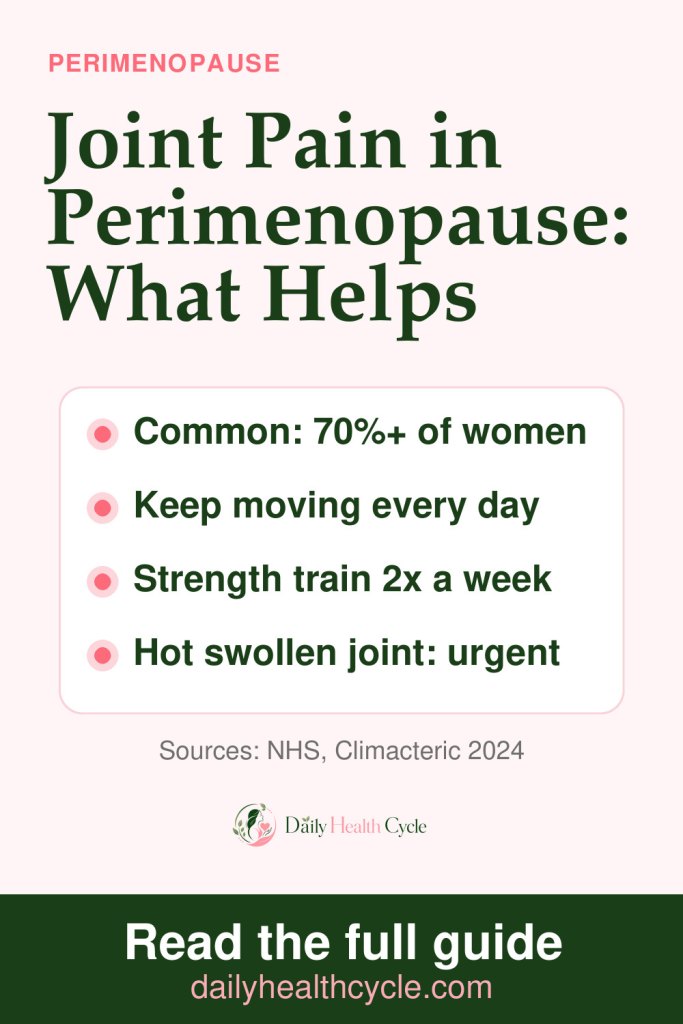
Quick answer: Yes, perimenopause joint pain is common. The NHS lists muscle aches and joint pains as a perimenopause and menopause symptom, and a 2024 review estimated that more than 70% of women have musculoskeletal symptoms through the transition. Regular exercise, strength training and a healthy weight help. See a doctor if a joint is hot and swollen, or if stiffness lasts more than 30 minutes after waking.
Key Takeaways
- The NHS lists muscle aches and joint pains as a symptom of perimenopause and menopause, and says joint pain can continue after menopause.
- A 2024 review estimated that more than 70% of women have musculoskeletal symptoms during the transition, and about 25% are disabled by them at some point.
- In the Women’s Health Initiative trial, estrogen-only HRT led to a modest but lasting reduction in joint pain compared with placebo.
- Joint pain in midlife can also come from osteoarthritis, rheumatoid arthritis or an injury, so new or worsening pain is worth checking.
- Get help quickly if a joint is hot and swollen or you feel unwell with a fever (NHS).
Can Perimenopause Cause Joint Pain?
Yes. The NHS lists muscle aches and joint pains among the symptoms of perimenopause and menopause, and notes that some symptoms, such as joint pain and vaginal dryness, can continue after menopause. On its joint pain page, the NHS links menopause joint aches to lower levels of estrogen.
It’s also very common. In a 2024 review in Climacteric, researchers estimated that more than 70% of women experience musculoskeletal symptoms during the menopause transition, and that 25% are disabled by them at some point (Wright et al., 2024). They proposed a new term, the “musculoskeletal syndrome of menopause,” to describe the joint pain, muscle loss, bone loss and worsening osteoarthritis that are influenced by falling estrogen.
Why It Happens
Estrogen affects many tissues around the joints, including cartilage, muscle and bone. As levels fall and fluctuate in perimenopause, these tissues can change, which may explain why aches and stiffness often appear around this time. The exact mechanism is still being studied, and researchers note that the evidence linking estrogen loss directly to joint pain is not yet complete.
Other changes in midlife can add to the pain. Muscle mass starts to fall during the transition, and weight gain puts extra load on knees and hips. Poor sleep, which is common in perimenopause, can also make pain feel worse.
What It Feels Like
Women describe menopause-related joint pain in different ways. Common patterns include:
- Aches or stiffness in several joints, such as knees, hips, hands, shoulders or the lower back
- Stiffness that’s worse in the morning or after sitting still
- Pain that moves around rather than staying in one joint
- Aches that come with other symptoms, such as hot flashes, poor sleep or fatigue
Other Causes to Rule Out
Not all joint pain in your 40s and 50s is hormonal. The NHS describes two common types of arthritis that can start around this age:
- Osteoarthritis: pain that gets worse when you walk or use the joint, with stiffness after activity. It’s more common over 45 (NHS). Its morning stiffness usually wears off within 30 minutes of getting up.
- Rheumatoid arthritis: pain, swelling and stiffness that typically affect joints on both sides of the body, are worse after rest, and cause morning stiffness that often lasts longer than 30 minutes (NHS). Swollen joints can feel hot and tender.
An injury, a thyroid problem or a side effect of some medicines can also cause joint or muscle pain. If your pain is new, getting worse, or doesn’t fit the usual pattern, it’s worth getting it checked rather than assuming it’s hormonal.
What Helps
Everyday steps
- Keep moving. The NHS advises regular exercise and says not to stop moving a painful joint completely, even while resting it.
- Build strength. Muscle mass falls during the transition, and stronger muscles support the joints. The NHS physical activity guidelines recommend strengthening activities on at least 2 days a week.
- Manage your weight. If you’re overweight, losing weight reduces the load on knees and hips (NHS).
- Use cold for flare-ups. The NHS suggests an ice pack wrapped in a towel for up to 20 minutes every 2 to 3 hours.
- Ask a pharmacist about painkillers that are suitable for you.
- Don’t smoke, and aim for a balanced diet (NHS).
Hormone therapy
HRT isn’t prescribed for joint pain alone, but it may help if you’re taking it for other menopause symptoms. In the Women’s Health Initiative trial of 10,739 postmenopausal women, those taking estrogen-only HRT reported joint pain slightly less often after one year than those taking a placebo (76.3% vs 79.2%), and the difference persisted through year three. Joint swelling, however, was slightly more common with estrogen (Chlebowski et al., Menopause, 2013). The researchers described the benefit as modest but sustained.
If you’re considering HRT for hot flashes or other symptoms, see our guide to HRT in perimenopause for the benefits, risks and who it suits.
When to See a Doctor
The NHS advises seeing a GP if:
- The pain hasn’t improved after two weeks of home treatment
- Pain or swelling is getting worse or keeps coming back
- It’s affecting your daily activities or sleep
- Your joints stay stiff for more than 30 minutes after waking
Get help urgently if the skin around a painful joint is swollen and hot, or you feel generally unwell with a high temperature. Go to A&E or call emergency services after an injury if you can’t put weight on the joint, the joint looks out of place, or you have tingling or numbness around it.
Tracking when your joint pain happens, alongside your cycle, sleep and other symptoms, can help your doctor see the pattern. Our free perimenopause symptom tracker includes joint and muscle aches.
Perimenopause Joint Pain FAQ
Is joint pain a sign of perimenopause?
It can be. The NHS lists muscle aches and joint pains as a symptom of perimenopause and menopause, and links them to lower estrogen. But joint pain also has other causes, such as osteoarthritis, rheumatoid arthritis or injury, so new or worsening pain is worth checking.
Does menopause joint pain go away?
It varies. For some women it eases after the transition, but the NHS says joint pain is one of the symptoms that can continue after menopause. Regular exercise, strength training and managing your weight can help in the meantime.
Can HRT help joint pain?
It may help a little. In the Women’s Health Initiative trial, women on estrogen-only HRT reported joint pain slightly less often than those on placebo, an effect the researchers called modest but sustained. HRT is usually prescribed for other symptoms, such as hot flashes, rather than for joint pain alone.
How do I know if it’s arthritis or menopause?
The pattern can help. Osteoarthritis usually hurts more with use and its morning stiffness wears off within 30 minutes. Rheumatoid arthritis often affects both sides of the body, causes swollen, warm joints and morning stiffness that lasts longer. A GP can examine you and arrange tests if needed.
What exercise is best for perimenopause joint pain?
Regular movement you can keep up, plus strength training at least twice a week. The NHS advises not to stop moving a painful joint completely. Low-impact activities such as walking, swimming and cycling are often easier on sore joints.
Your Next Step
Start with gentle, regular movement and two strength sessions a week, and keep a note of which joints hurt and when. If the pain is new, getting worse or affecting your life, book a GP appointment and mention your other perimenopause symptoms too: together they give a clearer picture.
Free printable
Perimenopause symptom & cycle tracker
Track your periods, sleep, hot flashes and mood on one page, then bring it to your appointment. Enter your email to download it.
Sources cited in this article
- NHS: Symptoms (nhs.uk)
- joint pain page (nhs.uk)
- Wright et al., 2024 (pubmed.ncbi.nlm.nih.gov)
- NHS: Symptoms (nhs.uk)
- NHS physical activity guidelines: Physical activity guidelines for adults aged 19 to 64 (nhs.uk)
- Chlebowski et al., Menopause, 2013 (pubmed.ncbi.nlm.nih.gov)
Last checked November 8, 2026. Spot an outdated source? Tell us.
About the author: Jessica Bordo writes Daily Health Cycle out of personal interest in women’s health, not as a clinician. Each article summarizes what sources such as the NHS, NICE and published studies say, and links to them so you can check the claims yourself. Use these guides to prepare questions for your own clinician, not to replace their advice. Our editorial standards explain how we research and update articles.
This article is for general education and isn’t medical advice. See our full disclaimer and talk with a qualified clinician about your own care.