

Last updated October 25, 2026. Educational information, not medical advice: see our Medical Disclaimer.
Polycystic ovary syndrome (PCOS), which the NHS now calls polyendocrine metabolic ovarian syndrome (PMOS), is usually talked about in terms of irregular periods, acne and fertility. But underneath many of those symptoms is a metabolic problem: insulin resistance. The 2023 international PCOS guideline calls insulin resistance a key feature of PCOS, and the World Health Organization describes PCOS as a chronic condition that raises the long-term risk of insulin resistance and type 2 diabetes (International PCOS Guideline; WHO).
This guide explains PCOS insulin resistance: how the two feed each other, the signs to watch for, which blood test the guideline actually recommends, and what helps, from everyday habits to metformin. New to PCOS? Start with our guide to PCOS symptoms.
Key Takeaways
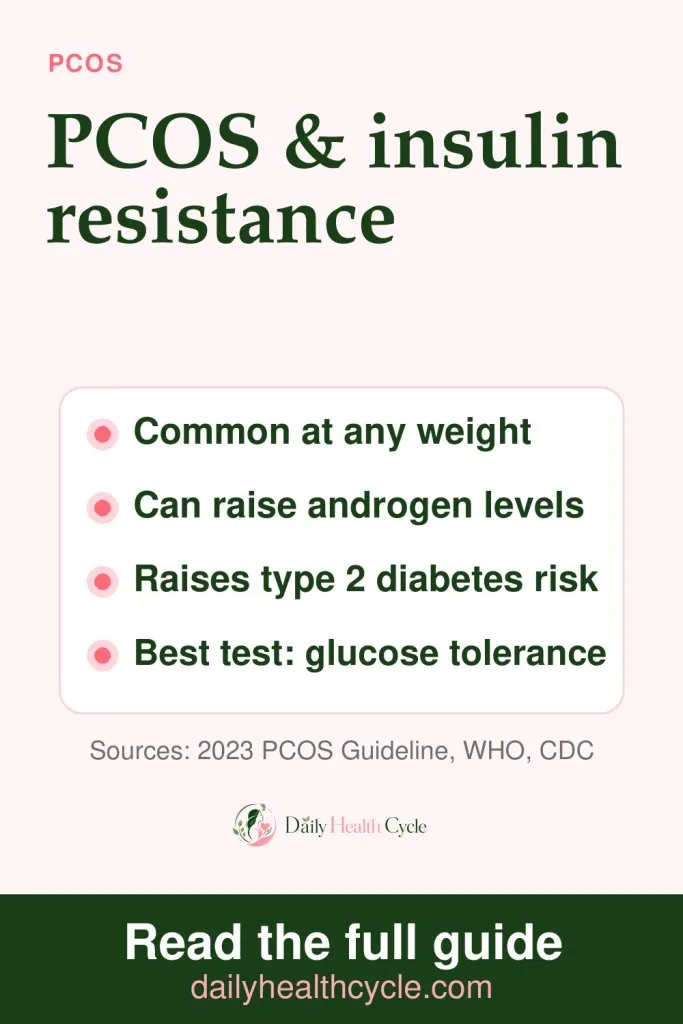
- Insulin resistance is a key feature of PCOS, and the 2023 international guideline says women with PCOS have a higher risk of prediabetes and type 2 diabetes regardless of age or weight.
- High insulin can push the ovaries to make more androgens (male-type hormones), which drives symptoms such as irregular periods, acne and excess hair.
- Fasting insulin and HOMA-IR tests aren’t recommended in routine care. The guideline recommends checking blood sugar at diagnosis, ideally with a 75 g oral glucose tolerance test, then every 1 to 3 years.
- No single diet or type of exercise has been shown to be best for PCOS. Healthy eating and activity you can stick with are what count.
- Metformin should be considered for adults with PCOS and a BMI of 25 or more. Inositol may modestly improve metabolic measures but has limited clinical benefits.
In this article:
- How PCOS and Insulin Resistance Are Linked
- Signs of Insulin Resistance in PCOS
- Which Tests to Ask For
- Lifestyle: What the Evidence Supports
- Medicines and Supplements
- Long-Term Health: Why It Matters
- PCOS and Insulin Resistance FAQ
How PCOS and Insulin Resistance Are Linked
Insulin is the hormone that moves sugar from your blood into your cells. With insulin resistance, your cells respond less well, so your pancreas makes more insulin to keep blood sugar in range. In PCOS, those higher insulin levels can stimulate the ovaries to produce more androgens, which can disrupt ovulation and lead to irregular periods, acne and unwanted hair growth.
PCOS is common. The WHO estimates it affects 10% to 13% of women worldwide, and up to 70% of those affected don’t know they have it (WHO). It isn’t only a weight issue, either. The international guideline says women with PCOS have a higher risk of impaired fasting glucose, impaired glucose tolerance and type 2 diabetes regardless of age and BMI (International PCOS Guideline). Higher weight does make insulin resistance worse, though, which is why weight changes can make PCOS symptoms better or worse.
The guideline also says many women with PCOS face weight stigma in healthcare, and that there’s no consistent evidence that women with PCOS eat or move differently from women without it. If you’ve been told to “just lose weight,” it’s fair to ask for a proper metabolic check.
Signs of Insulin Resistance in PCOS
Insulin resistance itself often causes no symptoms. The CDC lists these PCOS signs, several of which are linked to insulin (CDC):
- dark, velvety skin in body folds such as the neck, armpits or groin (acanthosis nigricans)
- weight gain, often around the middle
- irregular periods
- acne and extra hair growth on the face or body
Because you can’t feel insulin resistance reliably, testing matters more than symptoms. Our guide to insulin resistance symptoms in women explains the general signs and blood sugar ranges in more detail.
Which Tests to Ask For
This is where many women get confused. Online, you’ll see advice to ask for fasting insulin or a “HOMA-IR” score. The 2023 guideline says insulin resistance is part of how PCOS works, but clinically available insulin tests are of limited value and aren’t recommended in routine care (International PCOS Guideline). Instead, it recommends:
- Checking blood sugar at diagnosis in all adults and teens with PCOS.
- A 75 g oral glucose tolerance test (OGTT) as the most accurate test, whatever your weight. You drink a sugary drink and have your blood sugar measured before and 2 hours after.
- Fasting glucose or HbA1c if an OGTT isn’t possible, though they’re less accurate.
- Repeating the check every 1 to 3 years, depending on your other diabetes risk factors.
- An OGTT before trying to get pregnant or starting fertility treatment, because the risk of high blood sugar in pregnancy is higher with PCOS.
Lifestyle: What the Evidence Supports
Lifestyle changes are the foundation of PCOS care, but the evidence is more flexible than social media suggests (International PCOS Guideline):
- Diet: there’s no evidence that any one type of diet is better than another for PCOS. Any healthy eating pattern in line with general guidelines will help, so choose one you can keep up.
- Exercise: no single type or intensity of exercise has been shown to be best. Any physical activity in line with general guidelines has health benefits. Exercise also makes your muscles more sensitive to insulin.
- Weight: if you have overweight, losing weight and moving more can lower your risk of type 2 diabetes (CDC).
- Behavioral support: goal setting, self-monitoring and relapse planning can help changes stick.
Sleep matters too: the guideline notes that women with PCOS have a higher rate of obstructive sleep apnea. Mention snoring or daytime sleepiness to your doctor.
Medicines and Supplements
What the 2023 guideline says (International PCOS Guideline):
- Metformin should be considered for adults with PCOS and a BMI of 25 or more to improve weight, insulin resistance, blood sugar and cholesterol. It may also be considered at a lower BMI, though the evidence there is limited. Stomach side effects are common, and the guideline suggests watching vitamin B12 levels in women with risk factors such as diabetes or a vegan diet.
- The combined pill is preferred over metformin for irregular periods and excess hair, while metformin is preferred for metabolic problems. Taking both together adds little benefit for most women.
- Weight-loss medicines, including GLP-1 medicines such as semaglutide and liraglutide, could be considered alongside lifestyle changes, following the same rules as for anyone else. Our guide to GLP-1 medicines for women covers side effects and the effect on birth control.
- Inositol (myo-inositol or D-chiro-inositol) could be considered based on personal preference. It may improve some metabolic measures, but clinical benefits for ovulation, hair growth or weight are limited, and no specific type or dose can be recommended. Tell your doctor if you take it.
Long-Term Health: Why It Matters
The CDC says more than half of women with PCOS develop type 2 diabetes by age 40, and lists gestational diabetes among the health problems women with PCOS can develop, especially with overweight (CDC). The good news is that this risk can be lowered, and regular blood sugar checks catch problems early, when they’re easiest to reverse.
The guideline recommends ongoing blood sugar checks rather than a one-off test, and in your 40s the metabolic side of PCOS can overlap with the changes of perimenopause. If you’re in your 40s and gaining weight around the middle, our guide to perimenopause weight gain explains what’s hormonal and what you can change. If you’re planning a pregnancy, see our guide to pregnancy after 35.
PCOS and Insulin Resistance FAQ
Do all women with PCOS have insulin resistance?
Not all, but it’s very common and the 2023 international PCOS guideline calls it a key feature of the condition. The guideline says women with PCOS have a higher risk of prediabetes and type 2 diabetes regardless of age and BMI, so it isn’t limited to women with higher weight.
How do I test for insulin resistance with PCOS?
The 2023 guideline doesn’t recommend fasting insulin or HOMA-IR tests in routine care because they’re of limited clinical value. Instead it recommends checking blood sugar at diagnosis, ideally with a 75 g oral glucose tolerance test, then every 1 to 3 years. Fasting glucose or HbA1c can be used if that test isn’t possible.
What is the best diet for PCOS and insulin resistance?
There isn’t one. The international guideline found no evidence that any one type of diet is better than another for PCOS. Any healthy eating pattern consistent with general guidelines will have benefits, so the best diet is one you can stick with.
Should I take metformin for PCOS?
The 2023 guideline says metformin should be considered for adults with PCOS and a BMI of 25 or more to improve weight, insulin resistance, blood sugar and cholesterol, and may be considered at lower BMIs. Stomach side effects are common. It’s a prescription medicine, so discuss it with your doctor.
Does inositol help PCOS?
It may help a little. The guideline says inositol could be considered based on personal preference, with limited harm and possible improvement in metabolic measures, but limited clinical benefits for ovulation, hair growth or weight. No specific type or dose can be recommended yet.
Your Next Step
If you have PCOS and haven’t had your blood sugar checked in the last 1 to 3 years, ask your doctor for an oral glucose tolerance test, or at least fasting glucose and HbA1c. Then pick one realistic change to eating or activity that you can keep up for the next month. For the bigger picture of your hormones, read our guide to hormonal imbalance symptoms.
Free printable
Perimenopause symptom & cycle tracker
Track your periods, sleep, hot flashes and mood on one page, then bring it to your appointment. Enter your email to download it.
Sources cited in this article
- NHS: Polycystic ovary syndrome pcos (nhs.uk)
- International PCOS Guideline (pubmed.ncbi.nlm.nih.gov)
- WHO: Polycystic ovary syndrome (who.int)
- CDC: Pcos polycystic ovary syndrome (cdc.gov)
Last checked October 22, 2026. Spot an outdated source? Tell us.
About the author: Jessica Bordo writes Daily Health Cycle out of personal interest in women’s health, not as a clinician. Each article summarizes what sources such as the WHO, the CDC and international medical guidelines say, and links to them so you can check the claims yourself. Use these guides to prepare questions for your own clinician, not to replace their advice. Our editorial standards explain how we research and update articles.
This article is for general education and isn’t medical advice. See our full disclaimer and talk with a qualified clinician about your own care.